
Body Beautiful
It’s easy to take our bodies for granted, but if you stop and think about it, they’re home to an array of wonders. Consider, for example, that our eyes can see distant galaxies, our hair contains traces of gold, and our veins could stretch for 60,000 miles if laid end to end (that’s enough to go around the world twice). I did some fact-finding and gathered some fascinating facts about the human body. Now I realize that this post is much longer than most. I couldn’t help myself; there are so many incredible facts! Perfect for wowing your friends or, in my case, making my girls and Jackie just shake their heads! Enjoy!
Some music while you read!
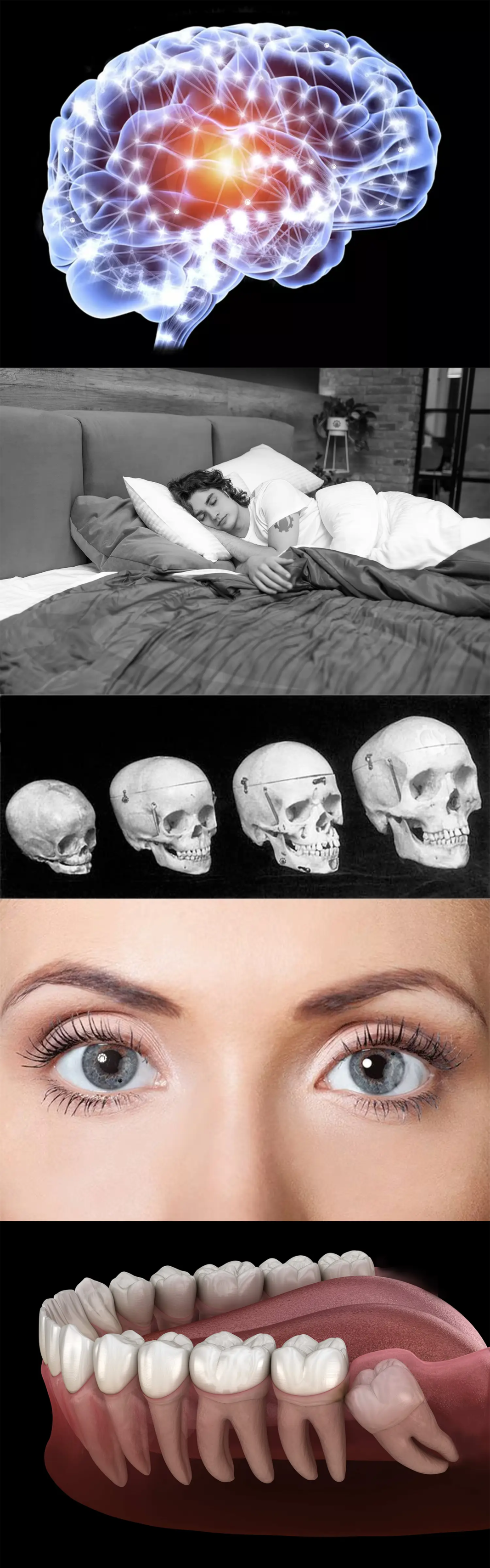
We Can Grow New Brain Cells – Humans are born with about 100 billion brain cells (not quite sure how we count them, and I’m thinking some of my siblings may have gotten a short batch). Until the 1990s, most scientists believed 100 billion was all we’d ever have. Growing new neurons would interrupt communication among our existing brain cells and short-circuit the whole system … or so the theory went. Then, a 1998 study found evidence that humans could generate new cells in the brain’s hippocampus, an area associated with learning and memory. More recent studies have largely supported the idea and suggest that we might be able to make up to 1,500 neurons a day. Though research continues, neurogenesis is good news: Growing fresh neurons may make our brains more resilient against Alzheimer’s, depression, anxiety, and other disorders.
12% of People Dream in Black and White – While most people dream in full color, around 12% of the population is tuned to Turner Classic Movies, and often experiences dreams in only black and white. The analogy to television is an apt one, as researchers discovered in 2008 that people under the age of 25 almost never dreamed in monochrome, while members of the boomer generation and older had dreams devoid of color roughly a quarter of the time. Although it is difficult to prove definitively that TV is to blame, the number of people who reportedly dream in grayscale has slowly fallen over the decades.
We’re Taller in the Morning – Gravity is an essential force on Earth: It keeps the planet in orbit at a safe and comfortable distance from the sun and even holds our atmosphere in place. It does have a downside, however: It weighs down the human body, making us a tiny bit shorter by the end of the day. From the moment we climb out of bed in the morning, gravitational forces push down on us, applying downward pressure on our joints, compressing our spines, and causing our organs to settle. All that strain adds up, enough to shrink a body by 1 centimeter. Sleeping horizontally gives our spines and joints time to decompress and gain back the height lost during the day, making us once again slightly taller by morning.
Our Eyes Actually See Things Upside-Down – Much of the work of perceiving the world around us actually takes place in the brain. In a way, our eyes act as a camera, and our brains as a kind of “darkroom” that develops that information into what we call our vision. One of the most perplexing aspects of this dual relationship is that the images projected onto our retina are actually upside-down. Because the cornea — the transparent part of the eye covering the iris and pupil — is a convex lens, when light enters the cornea, it’s flipped upside down. It’s the brain’s job to translate this inverted information, as well as two 2D images, one from each eye, into one cohesive 3D image.
Our Hair Contains Traces of Gold – Gold is present in low levels throughout the Earth; it’s been found on every continent except Antarctica (I think it’s in there…just gotta dig) as well as in the planet’s core, the oceans, plants, and in humans, too. The average human body, weighing about 150 pounds, is said to contain approximately 0.2 milligrams of gold, which we excrete through our skin and hair. Babies less than 3 months old tend to have more gold in their manes than older people, thanks to the precious metal being passed along in human breast milk. (we have daughters with blonde hair…I’m rich!). And while no one’s suggesting we should mine the gold in hair or breast milk (as far as we know), researchers are studying whether gold, and other metals, might be recovered from human waste – now that’s a real …
Your Skull Never Stops Growing – By the time most of us reach age 20 or so, the bones in our bodies are pretty much done growing. The growth plates that caused us to put on inches in our youth are now hardened bone, and in fact, adults tend to drop an inch or two in height as worn-out cartilage causes our spines to shrink over time. However, there are a few bones that buck this biological trend. Skulls, for example, never fully stop growing, and the bones also shift as we age. As we grow older, the forehead moves forward, while cheekbones tend to move backward, the skull tilts forward, overlying skin droops and sags. Human hips also continue to widen as the decades pass, meaning those extra inches aren’t only due to a loss of youthful metabolism – hips continue to grow well into our 70s, and found that an average 79-year-old’s pelvic width was 1 inch wider than an average 20-year-old’s.
Gray Is the World’s Rarest Eye Color – Human eyes are entirely unique; just like fingerprints, no two sets are alike. But some genetic anomalies create especially unlikely “windows” to the world — like gray eyes. Eye experts once believed that human eyes could appear in only three colors: brown, blue, and green, sometimes with hazel or amber added. More recently, the ashy hue that was once lumped into the blue category has been regrouped as its own, albeit rarely seen, color. Brown-eyed folks are in good company, with up to 80% of the global population sporting the shade, while blue eyes are the second most common hue. Traditionally, green was considered the least common eye color, though researchers now say gray is the rarest, with less than 1% of the population seeing through steel-colored eyes.
We Breathe Primarily Out of One Nostril at a Time – The human nose can smell up to 1 trillion odors (ok, who’s counting them??), and trap harmful debris in the air before it enters your lungs. But arguably its most important job is to condition the air you breathe before that air enters your respiratory tract. This means warming and humidifying the air before it passes to your throat and beyond. To do this, the nose undergoes a nasal cycle in which one nostril sucks in the majority of the air while the other nostril takes in the remaining portion. A few hours later (on average), the nostrils switch roles. This cycle is regulated by the body’s autonomic nervous system, which swells or deflates erectile tissue found in the nose. Although we don’t notice this switch throughout the day, if you cover your nostrils with your thumb one at a time, you’ll likely observe that air flow through one is significantly higher than the other. This is also why one nostril tends to be more congested than the other when you have a cold.
Our Human Eye Can See Objects Millions of Miles Away – While the majority of us wouldn’t consider our vision to be extraordinary, the human eye can see much farther than most of us realize. That’s because our ability to perceive an object is based not only on its size and proximity, but also on the brightness of the source. Practically speaking, our sight distance is hindered by factors such as atmospheric conditions and the Earth’s curvature, which creates the drop-off point of the horizon just 3 miles away. However, a trip outside on a clear night reveals the true power of our vision, since most of us are able to make out the faint haze of the Andromeda galaxy some 2.6 million light-years into space.
You Might Be Glowing Right Now – Bioluminescence, the strange biology that causes certain creatures to glow, is usually found at the darkest depths of the ocean, where the sun’s light doesn’t reach. While these light-emitting animals seem otherworldly, the trait is actually pretty common — in fact, you’re probably glowing right now (Jackie always says I have a glow about me!). According to researchers at Tohoku Institute of Technology in Japan, humans have their own bioluminescence, but at levels 1,000 times less than our eyes can detect. This subtle human light show, viewable thanks to ultra-sensitive cameras, is tied to our metabolism. Free radicals produced as part of our cell respiration interact with lipids and proteins in our bodies, and if they come in contact with a fluorescent chemical compound known as fluorophores, they can produce photons of light. This glow is mostly concentrated around our cheeks, forehead, and neck, and is most common during the early afternoon hours, when our metabolism is at its busiest.
The Space Between Your Eyebrows Is Called the “Glabella” – You know “hands, shoulders, knees, and toes (knees and toes)”, but has anyone ever introduced you to the glabella? This isn’t some hidden-away body part like the back of the elbow or something spleen-adjacent — it’s smack dab in the middle of your face. Latin for “smooth, hairless, bald,” the glabella is the small patch of skull nestled in the middle of your two superciliary arches (also known as your eyebrow ridges). Many people know of the glabella because of the wrinkles, or “glabellar lines,” that can appear in the area. (BONUS – the space under our nose is called the philtrum, which is the vertical groove between the bottom of the nose and the top of the upper lip).
We Have Wisdom Teeth Because Our Ancestors Had to Chew More – Early humans were hunter-gatherers who survived on leaves, roots, meat, and nuts — things that required a lot of crushing ability. The more grinding teeth you have, the easier it is to eat tough foods. As humans evolved, they began to cook their food, making it softer and easier to chew. Having three full sets of molars became unnecessary. Early humans also had larger jaws than we do today, which were able to support more teeth. Over time, as the need for super-powerful jaws decreased, human jaws got smaller. But the number of teeth stayed the same. That’s why today, many people need to get their wisdom teeth removed in order to create more space.
It’s a Myth That You Use Only 10% of Your Brain – Maybe you’ve heard peppy TED Talk speakers say that our brains have limitless potential… if only we could employ them to their fullest extent. They might have been referring to the myth that we use just 10% of our brain power at a given time (Jackie reminds me of this way too often, and… she is not the only one!). This idea probably grew from a 1907 article for the journal Science by William James, one of the founders of modern psychology. “Compared with what we ought to be, we are only half awake… we are making use of only a small part of our possible mental and physical resources,” he wrote. Dale Carnegie cited James in How to Win Friends and Influence People, his 1936 self-help bestseller. Eventually, someone (it isn’t clear who) claimed we were ignoring 90% of our mental powers. But there’s no scientific basis for the belief – (unless you ask all of the wives out there!).
Our Thumbs Have Their Own Pulse – If you’ve ever seen someone track their pulse (in real life or on a crime drama), you’ll notice that the index and middle fingers are always pressed on the neck’s carotid artery, which is responsible for transporting blood to the brain. There’s a reason why doctors (and actors who play doctors on TV) use these fingers and not, say, their thumbs. While your thumb is good for many things, taking your pulse isn’t one of them. Unlike the other four digits, the thumb has its own exclusive artery, the princeps pollicis, which makes it biologically unreliable as a pulse reader — because you’ll feel it pulse instead of the artery in your neck.
We Have Far More Than Five Senses – We’ve all heard that we have five senses: sight, smell, hearing, touch, and taste. That idea goes back to the Greek philosopher Aristotle — but it’s wrong. Modern science has identified as many as 32 senses, by looking at receptors in our bodies with the job of receiving and conveying specific information. Senses you might not know you have include your vestibular sense, which controls balance and orientation; proprioception, which governs how our bodies occupy space; thermoception, which monitors temperature; nociception, our sense of pain; and many more. (They forgot my “spidy sense … that creepy feeling something is gonna happen).
Our Veins Could Stretch 60,000 Miles – There are some surprising lengths packed inside the human body. The small intestine, for example, could stretch 22 feet end to end (though hopefully it never has to). Not to be outdone, our nerves could stretch 37 miles if laid end to end. However, none of this compares to our circulatory system. According to the British Heart Foundation, the veins in an adult human could stretch an astonishing 60,000 miles — that’s farther than it takes to circumnavigate the globe twice. Capillaries, which transport blood between arteries and veins, make up 80% of this length (hard to imagine measuring this!)
Our “Funny Bone” Is Not a Bone – Your “funny bone,” named as such for its location near the humerus bone (“humorous,” get it?) is not really a bone at all. Rather, it’s part of the ulnar nerve, which runs from your neck all the way to your hand. Nerves are usually protected by bone, muscle, and fat, so they can perform their bioelectrical functions undisturbed, but a small part of the ulnar nerve in the back of the elbow is a little more exposed. There, the nerve is protected only by a tunnel of tissue, known as the cubital tunnel, so when you hit your “funny bone,” the ulnar nerve presses against the medial epicondyle (one of the knobby ends of the humerus bone), which in turn sends a painful sensation throughout your lower arm and hand. And because the nerve gives feeling to the pinky and ring fingers, those two digits may feel particularly sensitive compared to your other three fingers.
Everyone has a Unique Tongue Print – Our tongues, like our fingerprints, are specific to each individual. That’s right … people have tongue prints, which vary from one person to another due to both shape and texture. (who had to do this research – ugh!) And perhaps surprisingly, the organ has been gaining some popularity as a method for biometric authentication. Where fingerprints can be altered, eyes affected by astigmatism or cataracts, and voices changed just by the all-too-common cold, the human tongue is relatively protected from external factors. Sticking out one’s tongue for a print also involves a layer of conscious control and consent that goes beyond what’s required for retinal scans or even fingerprinting, which could make it a more appealing biometric tool. In fact, these “lingual impressions” may be so advantageous over other forms of authentication that some researchers have started investigating the idea of a tongue print database, using high-resolution digital cameras to record every ridge, line, and contour of that muscular organ in our mouths. (just don’t lick a cold street pole – “a triple dog dare!!”)
How did you do on last week’s logo contest?
Check out our logo guide for the “Time to Step Up” post here!




Leave a Reply
Want to join the discussion?Feel free to contribute!