
Winter Words
“Winter” means different things around the United States. Here in Cleveland, it is associated with snow scrapers, salt trucks, slush (Ugh!), heavy coats, and frozen faces. Folks in New England can almost guarantee they’ll have lots of snow, while Floridians might see a few flurries every few years. On the West Coast, in Los Angeles, temperatures might not even dip below 50 degrees Fahrenheit most days- that would be so boring! As regions across the country experience winter weather very differently, weather forecasters have developed special language for winter weather occurrences (my favorite is bomb cyclone, but I think that is a little dramatic)! I did some research and found some of the more popular storm names and definitions, along with winter words no longer in use. You will really be able to impress your friends with some of the following words! Stay warm and enjoy!
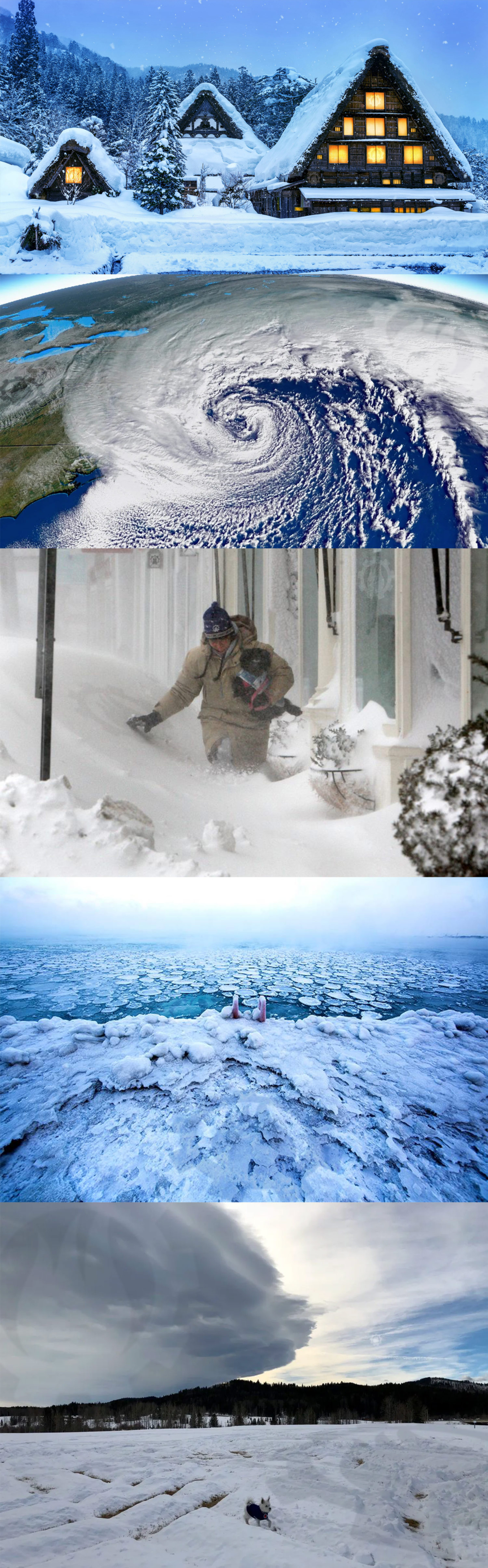
Alberta Clipper – this low-pressure system is named after the western Canadian province of Alberta, but the storms are known to make their way into the U.S. An Alberta clipper is a winter storm that generally moves southward from Alberta into the U.S., by way of the Plains, Midwest, and Great Lakes regions. It’s characterized by light snow, strong winds, and extremely cold temperatures. If the storm forms farther east in Canada, it’s sometimes called a “Saskatchewan screamer,” (great name!) after the province of Saskatchewan.
Blue Norther (Texas Norther) – Blue northers are common occurrences for Texans during the wintertime. These cold fronts cause a rapid drop in temperatures across the Southern Plains, often accompanied by icy precipitation. The name likely stems from the idea that these fronts are followed by a period of blue skies. Texas’s worst blue norther on record happened in 1899 when temperatures dropped to 23 below zero in the panhandle of the state.
Bomb Cyclone – This massive low-pressure system brings with it blizzards, severe thunderstorms, and heavy precipitation. For a winter cyclone to become a bomb, its central pressure must decrease by at least 24 millibars in 24 hours. This process of rapid intensification is called “bombogenesis,” a term coined in the 1980s that combines “bomb” with “cyclogenesis,” a meteorological term for storm formation. Bomb cyclones are most common along the Eastern Seaboard of the U.S., and cause strong winds, storm surge, coastal flooding, and major snowfall.
Chinook – The Chinookan peoples include several groups of Indigenous peoples from the Pacific Northwest. In the Salish language, chinook means “snow eater,” which is exactly what these winds do. A chinook is a warm winter wind that blows down the Rocky Mountains (in the U.S. and stretching up into Canada) onto the eastern slopes and prairies, melting the snow. Usually, chinook winds are welcome because they give locals a break from the cold, harsh winters.
Nor’easter – Nor’easters are powerful storms that primarily impact the Northeastern U.S. during the winter, but they can happen anytime from September through April. The name comes from the fact that the winds blow in from the northeast. These incredibly strong storms can bring high winds and heavy snowfall. In fact, some of the most famous storms in U.S. history have been nor’easters, such as the Storm of the Century (also called the Blizzard of 1993). As nor’easters intensify along the Atlantic coast, they reach maximum strength in New England and Canada
Polar Vortex – As its name suggests, a polar vortex is a low-pressure winter system that originates near the North or South Pole. Polar vortices exist at the poles year-round but strengthen during the winter. Northern areas of the U.S. may experience a polar vortex when the vortex at the North Pole expands, sending very cold air southward with the jet stream. These cold surges sometimes result in dangerously low temperatures and can impact vast portions of the country. Cleveland has gotten their fair share over the years.
Scutch – A scutch is a light dusting of snow, also called a “flurry.” “Scutch” is used mostly by Delawareans, but this charming term has been used in English to mean “a slight layer or thin coating” or “a sprinkling” since the early 20th century. The term likely came from Scotland originally.
Skiff – “Skiff” is another word for a light snowfall, and it’s used especially in the Midwest. It likely came from the Scottish verb “skiff,” meaning “to lightly move across a surface barely touching it.”
Snow Squall – A snow squall is an intense but usually short period of moderate to intense snowfall, known for low visibility and poor travel conditions. While these types of storms aren’t new, this term wasn’t used in official weather warnings until 2018. Because of their short duration (usually less than 30 minutes). The word “squall” came into English in the early 18th century as a nautical term meaning “a sudden, violent gust of wind.”
Here are some Antiquated Winter words time forgot:
Wintertide – Chilly temperatures, throngs of holiday shoppers, and festive family meals can only mean one thing: The winter season, or should we say, wintertide, is upon us. “Wintertide” is a 12th-century word synonymous with “wintertime,” though “wintertide” is probably seen only in literature now.
Algid – The next time you’re walking in the snow, use the word “algid” to describe how you’re feeling — cold. This 17th-century word was documented in Henry Cockeram’s The English Dictionarie of 1623, meaning “chill with cold. However, this once-wintry word is more closely linked with the medical field today – Doctors use “algid” to describe a person with cold, clammy skin and low blood pressure.
Crapulence – While it looks like it should be a rude word, “crapulence” is actually a perfectly cromulent (acceptable) term for holiday parties (making you look up words this week!) This archaic adjective describes a lack of restraint while eating or drinking that ultimately causes a headache or illness. It’s been part of English since the mid-17th century and came from the Latin word crapula, meaning “excessive drinking.” So… sometimes my friends are suffering from Crapulence!!
Ninguid – Millions of people will experience this every winter. “Ninguid” (or “ningid”) means “where much snow is.” It was published in Thomas Blount’s Glossographia in 1661, but it’s unclear when it was first coined.
Apricity – Most people can appreciate the feeling of the sun on their face during a cold winter day, and “apricity” describes exactly that. Though it’s no longer in most modern dictionaries, it was likely first recorded in Henry Cockeram’s dictionary in the early 17th century. Its entry reads: “Apricitie: The warmth of the Sunne in winter.” is closely related to “apricate,” another old-fashioned term that means “to bask in the sun.”
Doniferous – One of the hallmarks of the holiday season is gift-giving. Though this word is not found in many dictionaries today, “doniferous,” meaning “gift-bearing,” was in use centuries ago. We know it was printed in a 1677 early English dictionary by Elisha Coles.
Alms – Many people have a tradition of generosity and giving to charity during the winter season. There are various words for this, but a popular term in the past was “alms,” a noun denoting money, food, or other donations given to those in need. It’s been around since at least 1000 CE, when it was used in Middle English as “almes.” It was derived from the Greek eleēmosýnē, meaning “compassion.”
Frore – This synonym for “frozen” dates back to the 13th century as an alteration of “froren” in Middle English. It came from the Old English word frēosan, meaning “to freeze.” Irish fantasy writer Lord Dunsany used “frore” in his 1912 short-story collection, The Book of Wonder, in the line, “Her beauty was as still sunsets of bitter evenings when all the world is frore, a wonder and a chill.” (Jackie would shake her head or smack me if I said that!).
How did you do on last week’s logo contest?
Check out our logo guide for the “Wham-O & The Pluto Platter” post here!




Leave a Reply
Want to join the discussion?Feel free to contribute!