

Now That’s Debatable
Social media. Wow, what a battleground. Seems whenever someone posts a thought or idea or perspective, people pounce – some in support, some in disagreement, and some offering a different perspective on the matter. Like you, I’ll admit sometimes I get caught up in the debate, then realize that everyone is entitled to their opinion… because it is just that, THEIR opinion! With the country celebrating the founding of our nation this past summer, it got me thinking about the debates and construction of the Constitution, and eventually the Bill of Rights, which was first proposed on this day way back in 1789. Many naturally assume the Bill of Rights “came” with it. It didn’t. I always thought that the Constitution and Bill of Rights sort of went together, but when delegates signed the Constitution in Philadelphia on September 17, 1787, there was no Bill of Rights attached (historians say that omission nearly doomed the new Constitution before it ever took effect). What’s cool is that one of America’s most treasured documents exists in its original form today because so many citizens, commoners, and elected officials objected to the Constitution as it was originally written. And many of the comments about the Bill were expressed in secret articles strategically in the newspapers (a trick still used today) along with debates in taverns and conference halls. Here’s some fun history to ponder regarding the formation of the original ideas, the debates, and the final outcome (I wonder what would happen with today’s media, international secret “bots,” politicians and political parties all chiming in … Ouch!!) Enjoy! (And remember, enjoying this is not up for debate!!)
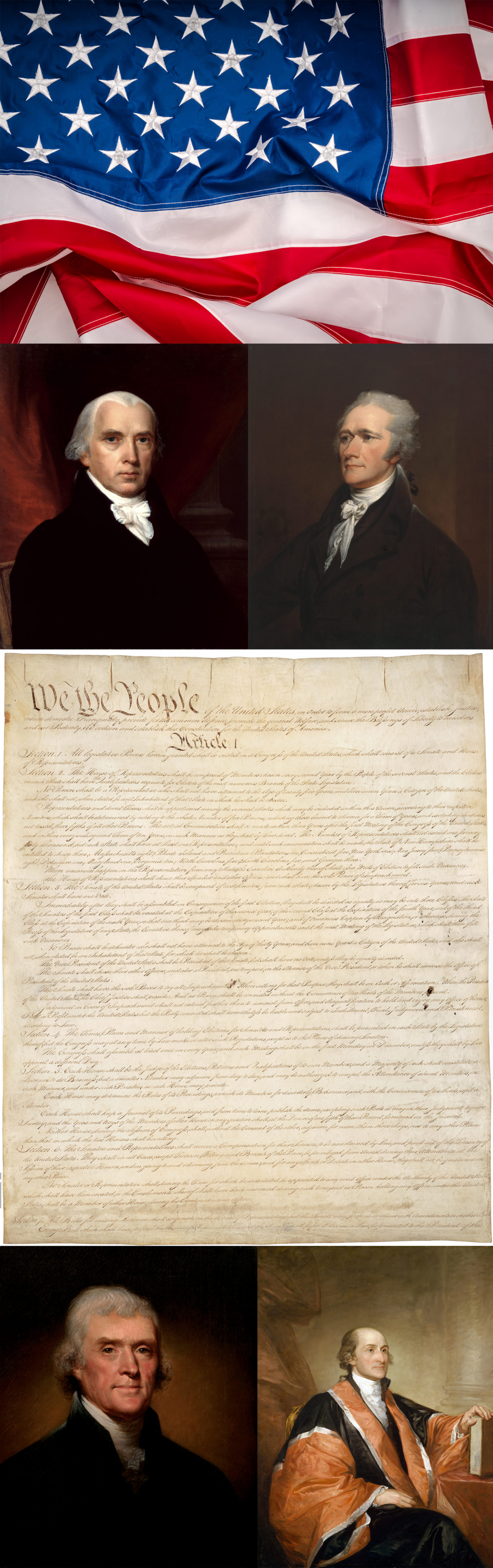
Early on, the debate wasn’t between patriots and opponents of freedom, as everyone involved valued liberty and wanted the new republic to succeed. The disagreement centered on a simple but profound question: How do we protect our freedoms from future government? The Federalists believed the Constitution already limited the powers of the federal government. Anti-Federalists believed that unless individual liberties were written down as “rights,” those limits might one day be ignored. (I can’t agree more – I have used the term: if it’s not in writing, it doesn’t happen!). Just ask my girls or team here at KHT. Looking back nearly 240 years later, it’s striking how familiar those debates sound. Americans still wrestle with the proper balance between government authority and individual rights (I love America!)
The debate over the Constitution wasn’t confined to the halls of government. It played out in newspapers across the young nation through essays written under mysterious pen names borrowed from ancient Rome. Imagine opening your newspaper to read thoughtful, persuasive commentaries signed not by politicians, but by Publius, Brutus, or Cato. Those essays were discussed in taverns, churches, coffeehouses, and town meetings much the way we debate issues online today.
The Constitution may be the only governing document in history that was publicly debated through dozens of anonymous newspaper essays before it even took effect. The conversation no longer belonged only to the delegates in Philadelphia…it belonged to the American people. These published essays were often several thousand words long, yet readers eagerly awaited each new installment. America’s first great political debate unfolded one newspaper article at a time.
It took some time, but history eventually revealed the identities behind the famous pen names. Publius was actually three men working together: Alexander Hamilton, James Madison, and John Jay. Together they produced the eighty-five essays we now know as The Federalist Papers, explaining why they believed the proposed Constitution deserved ratification.
On the opposite side stood Brutus, now widely believed to have been New York Judge Robert Yates, who attended the Constitutional Convention but left before it concluded because he believed the delegates were creating a national government that was too powerful. Many of Brutus’s warnings, particularly about the growing influence of the federal courts, are still debated by constitutional scholars today. Another leading critic, Cato, is generally believed to have been New York Governor George Clinton, who worried that a strong president and federal courts would eventually overwhelm the states (he was a big proponent of state rule, and wanted New York to remain independent). In 1787, readers judged the arguments without knowing who had written them. Learn More: Founders Online – Read the original letters and papers of Madison, Hamilton, Jefferson, Washington, and others.
One of history’s great ironies is that the Anti-Federalists lost the battle over ratification but won one of the greatest political concessions in American history. Their newspaper essays, speeches, and public meetings convinced millions of Americans that the Constitution needed explicit protections for individual liberty. (YEA!)
No one illustrates the value of thoughtful compromise better than James Madison. Today he is celebrated as the “Father of the Bill of Rights,” yet he initially questioned whether one was necessary. Madison believed the Constitution granted the federal government only limited powers. He asked, “Why list freedoms that Congress had never been authorized to violate?” His greatest concern was surprisingly modern. If certain rights were listed, would future generations conclude that any rights not listed simply didn’t exist? Rather than stubbornly defending his original position, Madison listened to the concerns of both citizens and political opponents. Did You Know? Madison’s original concern eventually inspired the Ninth Amendment, which reminds us that Americans possess rights beyond those specifically listed in the Constitution.
The Powerbrokers of their day: Hamilton, Henry, and Jefferson. Alexander Hamilton never fully embraced the idea of a Bill of Rights. Writing as Publius in Federalist No. 84, he argued that since the Constitution granted only limited powers to the federal government, there was no need to prohibit actions it had never been authorized to take. Ironically, his objections forced supporters of the amendments to think more carefully about their wording. Patrick Henry saw the issue very differently. Refusing even to attend the Constitutional Convention, he famously declared, “I smell a rat.” Henry distrusted concentrated government power and became one of the loudest voices demanding stronger protections for individual liberty. Meanwhile, Thomas Jefferson was watching events unfold from Paris, where he served as America’s ambassador to France. In one of history’s most influential letters, Jefferson reminded Madison that “a bill of rights is what the people are entitled to against every government on earth.” Though separated by an ocean, Jefferson helped shape one of America’s defining constitutional debates.
Once the new federal government convened, Madison transformed a political promise into legislative action. On June 8, 1789, he introduced a package of proposed amendments based on recommendations submitted by the states during ratification. The House approved seventeen amendments before sending them to the Senate, where further revisions reduced the package to twelve. Did You Know? Madison originally wanted the amendments inserted directly into the Constitution itself. Congress rejected the idea, choosing instead to place them at the end as amendments (the format we still use today). Learn More: National Archives – Creating the Bill of Rights
By September 25, 1789, Congress had completed weeks of debate and approved twelve proposed amendments. The document sent to the states wasn’t simply Madison’s work. It reflected countless edits, compromises, and improvements made by legislators who often disagreed but continued working toward common ground. The states would eventually ratify ten of those amendments on December 15, 1791. Together they became the Bill of Rights. (Two proposals did not receive enough support. One concerned the size of the House of Representatives and has never been adopted. The other, dealing with congressional pay raises, remained dormant until 1992, more than 202 years later, when it finally became the Twenty-Seventh Amendment.) Did You Know? The proposed amendments traveled from state to state by horseback, stagecoach, and sailing vessel. Every vote, every message, and every official copy moved at the speed of horse and wind.
Perhaps the greatest lesson of the Bill of Rights has little to do with constitutional law. It is a lesson about leadership, debating, and compromise. None of them got everything they wanted. Yet together they created one of the most enduring statements of individual liberty in human history.
Today, compromise is often portrayed as weakness. The history of the Bill of Rights tells a different story. America’s first great constitutional achievement after the Constitution itself was born not from political victory, but from respectful disagreement, thoughtful revision, careful listening, and the willingness to improve an imperfect first draft. More than two centuries later, that may be one of its most important lessons.
If you’d like to “dig deeper”, here are some great links:
- National Archives – The Bill of Rights
- National Archives – Creating the Bill of Rights
- Library of Congress – The Federalist Papers
- Founders Online (National Archives) – Original writings of Madison, Hamilton, Jefferson, Washington, John Jay, and many others.
- National Constitution Center – Interactive Constitution
How did you do on our last logo contest?
Check out our logo guide for the “Dog Days of Summer” post here!




Leave a Reply
Want to join the discussion?Feel free to contribute!