
Luxurious
As a foodie, every once in a while, I get to add a special treat to the end of a meal. As a kid, getting a bowl of ice cream, with chocolate topping or hot fudge, whipped cream, nuts, and a cherry on top, was (and still is) a big deal. Jackie seems to always surprise me with a “treat” – fresh bread, yummy pie, or some other incredible dessert that she “just whips up”! Recently I watched my Guardians make a great run at the end of the season, culminating in a champagne celebration – goggles and all. What a fun tradition! It got me to thinking about luxuries, and of course food and drink came to mind. Sooooooo, I did some digging and put together a fun list of “luxury” items they, not me, sometimes splurge on, like a tiny tin of caviar, or a slice of wagyu beef, just for a treat. This blog is a little long but well worth reading on some really crazy foods! Enjoy!

All around the world, people will pay hundreds, and sometimes thousands, of dollars for certain foods. Sometimes it’s because they taste extraordinary. But often there’s much more to it. When something is rare and coveted, it moves up the list to luxurious. It might be difficult to find, or take years to produce, or hours of painstaking labor turning what was once an ordinary item (fish eggs??) into a symbol of wealth and status. Here’s a list of some I thought you’d enjoy:
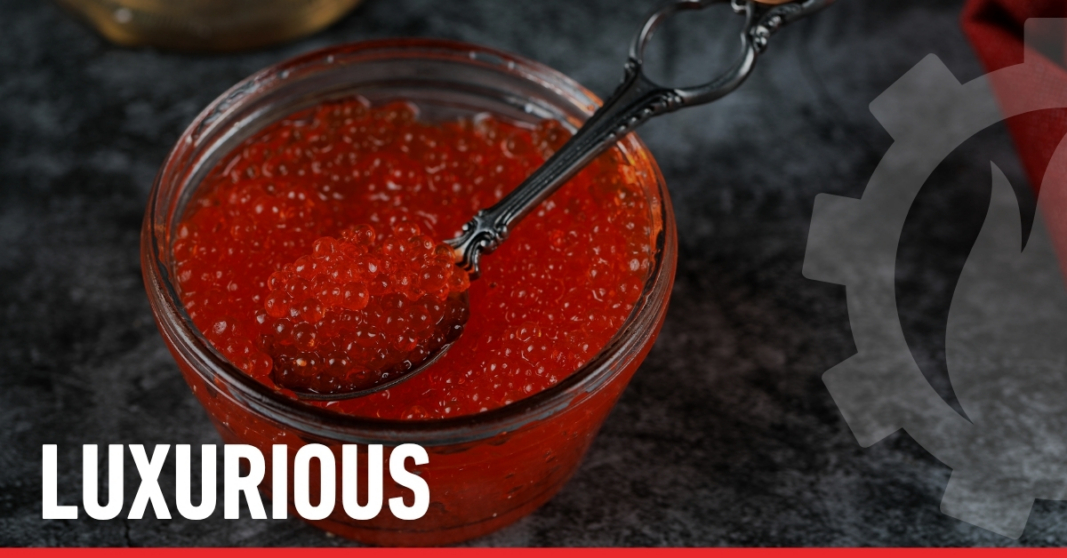
Caviar – From Bar Snack to Status Symbol
With roots in Russia, Persia, and the Caspian and Black Sea regions, caviar is salt-cured roe from sturgeon, and people have eaten it for centuries. Russian royalty helped give it an aristocratic reputation, but its history in America took a very different turn.
During the 1800s, sturgeon was so plentiful in American rivers that caviar could be remarkably inexpensive. Some bars reportedly offered the salty eggs free, much as they offer peanuts or Chex mix today, all to encourage customers to get thirsty and order another drink.
When the demand increased, sturgeon populations plummeted. Today most caviar comes from farmed sturgeon, particularly in China (of course), which has made some varieties more affordable again.
Roughly $60–$180 for a small 30-gram tin, although the finest varieties can cost several hundred dollars for that same little tin. Learn more about caviar
Truffles – Treasure Beneath the Ground
Unlike familiar mushrooms, truffles are a rare, lumpy underground mushroom that grows near the roots of certain trees (mainly oaks and hazels) in places like Italy and France. They’re famously expensive because they’re hard to find and their intense, earthy aroma makes them prized in fine cooking. Shaved over pasta, eggs, or risotto, a little goes a long way.
You can’t simply walk through the woods and spot one. For centuries, pigs were used to sniff them out. Today, trained dogs are more commonly employed. The best truffles are seasonal, difficult to cultivate, difficult to locate, and highly perishable. That combination makes the Italian white truffle, particularly those associated with Alba, one of the world’s most expensive foods.
A prime Italian white truffle can cost approximately $3,000–$4,500 per pound. Fortunately, restaurants shave only a small amount over your pasta or risotto. Learn more about truffles
Champagne – When a Place Became a Luxury
Sparkling wine wasn’t actually invented by Dom Pérignon, despite the wonderful stories surrounding the famous monk. But winemakers in Champagne, France gradually perfected the techniques that produced the elegant sparkling wine we recognize today.
By the 18th century, Champagne had become fashionable among European royalty and aristocrats when something important happened: Champagne stopped being a beverage and became an occasion.
Eventually, France protected the name itself. True Champagne comes from the Champagne region and must follow specific production requirements. Craftsmanship and aging add to the prestige and the price. A bottle of Avenue Foch 2017 auctioned off at $2.5 million in 2022, while a shipwrecked bottle of Heidsieck 1907, recovered from the Baltic Sea, was a bargain at $275,000 (would someone just pass the cheese and crackers, please!).
Today, a good bottle can be found for roughly $50–$75. Prestige bottles such as Dom Pérignon commonly start around $250, with rare vintages reaching thousands. Learn more about Champagne
Saffron – Ounce for Ounce, More Expensive than Gold
Its ancient origins are debated, but saffron has been cultivated and traded for thousands of years across the Mediterranean, Persia, and Southwest Asia.
Saffron comes from the saffron crocus (Crocus sativus), a fall-blooming purple flower in the iris family. The spice is actually the flower’s tiny red-orange stigma (the thread-like parts that collect pollen), which are hand-picked and dried. Each saffron crocus produces only three stigmas, which must be picked by hand, so it takes tens of thousands of flowers to produce a single pound of saffron. (Talk about a PIA (pain in the @%$) Job! Suddenly the price makes sense!
Good culinary saffron might cost roughly $10–$20 per gram, while exceptional grades can cost substantially more. By the pound, high-quality saffron can run several thousand dollars. Fortunately, a recipe usually calls for only a pinch. Learn more about saffron
Wagyu Beef – When a Steak Gets a Pedigree
“Wagyu” literally refers to Japanese cattle, but the extraordinary reputation comes from genetics, careful breeding, and the remarkable marbling of fat throughout the meat.
The most famous example is Kobe beef, which isn’t simply another name for Wagyu. Genuine Kobe must meet strict requirements and come from Tajima cattle raised in Japan’s Hyōgo Prefecture. The intricate marbling produces beef that is exceptionally tender and rich, which is also why Wagyu is usually eaten in much smaller portions than the giant 16-ounce steak we might order at an American steakhouse.
Authentic Japanese A5 Wagyu can retail for roughly $100–$250 or more per pound, while a Wagyu experience at a high-end restaurant can easily run $100–$300 per person. (I’ll take mine medium rare, with a baked potato). Learn more about Wagyu beef
Durian – The King of Fruits
Found in Southeast Asia, durian presents one of the great culinary contradictions. It’s large and round to oblong, growing up to 12 inches long and weighing between 2 and 7 lbs., covered in tough, sharp, greenish-brown spikes. Inside, it contains fleshy pods or compartments with a soft, creamy, custard-like pulp (ranging in color from pale yellow to red) surrounding large seeds.
Famous for a potent aroma caused by volatile sulfur compounds, it really stinks. While fans perceive it as sweet and fruity, detractors often compare it to a mix of rotting onions, gym socks, sewage, or garlic (lovely!). The smell is so powerful that it is officially banned in many hotels, subways, and airports across Southeast Asia. (If it’s like my gym socks…no thanks!).
Prices vary enormously by country, season, and variety. A premium imported Musang King can cost $50–$100 or considerably more per fruit in overseas markets. Learn more about durian
Escamoles – The Caviar of the Desert
Found in Mexico, with roots in pre-Hispanic cuisine, escamoles are ant larvae and pupae harvested from underground nests. (Not a chance, even for me!)
These aggressive black ant colonies build their nests deep within the root systems of native desert plants like maguey (agave) and cacti in the high plains of central Mexico. Visually, they look like small, off-white or beige grains, closely resembling pine nuts or corn kernels
They are traditionally sautéed and described as buttery and slightly nutty. Their rarity comes largely from the difficulty of harvesting them without destroying the ant colony and from their relatively short season.
Often around $50 a pound at the source, but considerably more when incorporated into dishes at upscale restaurants. Learn more about escamoles
Hákarl – Shark Luxury Born From Survival
Greenland shark presented Icelanders with an unusual problem: the fresh meat isn’t suitable for ordinary consumption. So, their solution was fermentation.
Shark meat is toxic to humans, as sharks lack a urinary tract and kidneys, meaning they process and expel metabolic wastes like urea and trimethylamine oxide (TMAO) directly through their skin and bodily tissues. Eating fresh meat causes severe poisoning and intense, staggering illness.
So, early Norse settlers in Iceland faced harsh winters and lacked sufficient salt for traditional curing. They developed a fermentation method to detoxify the abundant sharks in local Arctic waters. The shark is cleaned and cut into large slabs, and buried underground in shallow pits of gravelly sand and weighed down with heavy stones for 6 to 12 weeks. The pressure and bacterial action force out toxic fluids and break down the urea. The shark is then dug up, cut into strips, and hung in open-air drying sheds for 4 to 5 months. A dark crust forms, which is trimmed away before the interior meat is cubed for consumption
The result is hákarl, famous for its powerful ammonia-like smell and equally famous for challenging first-time visitors and associated with Iceland’s traditional midwinter foods.
Only about $10–$30 for a tasting portion, it isn’t really about price. It’s a rare cultural experience and an example of how a survival food became a national delicacy. Learn more about hákarl (I’ll just take two McFish sandwiches to go, please!)
Cuy – Guinea Pig for Dinner
Long before guinea pigs became household pets elsewhere in the world, Andean peoples, particularly in Peru, domesticated them as a food source.
While viewed exclusively as household pets in North America and Europe, they function as vital livestock in Peru, Ecuador, Bolivia, and Colombia. The name “cuy” (pronounced coo-ee) is onomatopoeic, mimicking the high-pitched whistling sound the animal makes.
With a relatively low meat-to-bone ratio (think small chicken wings), when prepared correctly, it features an incredibly crispy, crackling skin over tender, juicy meat. The flavor is rich and deeply savory, described as a cross between rabbit and dark meat chicken.
Cuy is typically seasoned simply with local spices like garlic, salt, cumin, and native black mint (huacatay). It is almost always served completely whole, with the head, ears, and paws intact (ok, that’s enough for me …). It’s been eaten for thousands of years and is associated with celebrations and special occasions.
Often approximately $15–$30, although upscale restaurants may charge more. (Someone, pass the Franks, please.) Learn more about cuy
Casu Marzu – The Cheese You’re Not Supposed to Eat
Found in Sardinia, Italy, this traditional sheep’s-milk cheese takes fermentation a little further than most of us are accustomed to.
Ready, because this is nuts…cheese flies lay eggs in the cheese. Cheesemakers cut open the top rind of the cheese wheel and leave it outdoors during the warm spring or summer months. The cheese fly (Piophila casei) is attracted to the opening and lays thousands of eggs inside. Once the eggs hatch, the tiny, translucent larvae eat and digest the cheese. The acid from the maggots’ digestive tract breaks down the fats, transforming the hard cheese into an ultra-soft, creamy, liquid-oozing texture. This liquid excretion is known locally as làgrima (“tears”).
It is incredibly intense, pungent, and spicy. Tasters compare it to an aggressively strong Gorgonzola or aged blue cheese, mixed with Mediterranean pastoral notes, leaving an aftertaste that burns slightly and lingers for hours.
Modern food-safety regulations have made commercial sale problematic, which has ironically added to the cheese’s notoriety. There isn’t really a reliable legal retail price. Informal-market prices vary considerably (and skip the crackers…I’m good.) Learn more about casu marzu
Edible Gold – Just Because We Can
The practice goes back centuries, including elaborate medieval European banquets. And finally, perhaps the strangest luxury ingredient of all…Gold.
It doesn’t make food sweeter. It doesn’t make it more tender. And it doesn’t add some extraordinary flavor. It tastes like essentially nothing. That’s almost the entire point. Gold has decorated pastries, chocolates, cocktails, steaks, hamburgers, and ice cream precisely because everyone recognizes what gold represents.
Prices: a $25,000 gold-decorated sundae, $214 gold-covered grilled cheese, and $100 caviar-and-gold hot dog. Interestingly, edible gold leaf itself isn’t necessarily outrageously expensive. A few small sheets may cost only a few dollars.
And why it’s a luxury: Because it’s gold, silly. Learn more about edible gold




Leave a Reply
Want to join the discussion?Feel free to contribute!