Happy Independence Day – From Our Family to Yours


kht group 768 blog-2

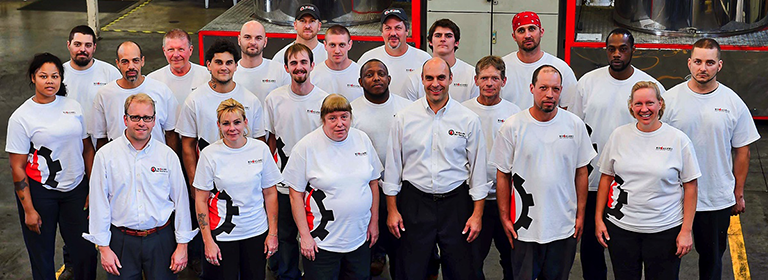
Tomorrow, as we all celebrate the 239th Independence Day of this great nation, we at Kowalski Heat Treating are also pleased to be celebrating our 40th anniversary by looking back to all the men and women of the KHT family who have helped make this anniversary year so special.

This holiday weekend, celebrate with your family – as John Adams wrote: “as the great anniversary Festival, to include “Pomp and Parade…Games, Sports, Guns, Bells, Bonfires and Illuminations from one End of this Continent to the other.”


We’re celebrating our 40th year. Did you know ball players didn’t always have numbers? I didn’t either.

baseball email 768 blog

Top left and center: Eddie Gaedel, the shortest player ever to take an at-bat in the majors sporting his number ⅛. Bottom left:An early portrait of Babe Ruth, Shoeless Joe Jackson in 1914, 1012 photo of popular Cleveland catcher Paddy Livingston. Far right: 1995 Jim Thome #25 Game-Worn Road Jersey that sold at auction for $600.

We’re so pleased to be celebrating our 40th year with you, we thought we’d give you some summertime baseball and Tribe “number trivia” to celebrate:

  • The first time a Major League baseball team to wear numbers was on this day, June 26, 1916 by our very own Cleveland Indians. Inspired by football and hockey’s use of numbers, the Tribe trotted on their home field wearing large numbers on their left sleeves. This “experiment” was tried for a few weeks, again the next season, and then abandoned.
  • 1923, the St. Louis Cardinals adopted uniform numbers on their sleeves. However, as then-manager Branch Rickey recalled, the Cardinals’ players were “subjected to field criticism from the stands and especially from opposing players,” – so the numbers were removed.
  • In 1929, the New York Yankees and Cleveland Indians were planning to start the season with uniform numbers on the back of their jerseys. The Yankees were rained out on opening day, while the Indians played, making Cleveland the first MLB franchise to wear numbers on their back. (The Yankees debuted their numbered jerseys the following day.)
  • The first MLB game to feature both teams wearing numbers on their jerseys was the game between the Indians and the Yankees on May 13, 1929.
  • By the mid-1930s, all MLB teams wore numbers; in 1937 the Philadelphia Athletics finally began wearing numbers on both home and away jerseys, making numbers a universal trait in the MLB.
  • The original baseball numbers were based on the lineup. The starting players would be numbered 1-8, based on their spot in the order. The backup catcher would be number 9, and the pitchers would wear 10-14 (but not 13, as that is superstitious). Notable examples of this system are teammates Babe Ruth (he was number 3 and batted third for the Yankees) and Lou Gehrig (number 4, batted fourth).
  • In the late 1930s, the 1938 and 1939 Pittsburgh Pirates tried standardizing number assignments by position. Under the Bucs’ experiment, pitchers were assigned numbers in the forties and fifties; catchers, coaches and managers in the thirties; infielders in the twenties; and outfielders in the teens.
  • Numbers 1-14 are usually only worn by position players, while numbers 50 and above are more likely to be worn by pitchers.
  • Numbers 60 and above are rarely worn in the regular season. During spring training, such high numbers are often given to players who are unlikely to make the regular-season team. It is generally thought that the higher the number, the less chance of making the team.
  • Many players grow emotionally attached to a number. When a player switches teams, his number is often already in use. Since the MLB allows number changes at any time, bribes occur for numbers. Among the most outrageous was when Brian Jordan joined the Atlanta Braves and gave then-third base coach Fredi González a $40,000 motorcycle for #33
  • When Rickey Henderson joined the Toronto Blue Jays he paid Turner Ward $25,000 for Henderson’s long-time career #24.
  • Not every player pays top dollar for his number; when Mitch Williams joined the Philadelphia Phillies, he bought #28 from John Kruk for $10 and two cases of beer.
  • In 1951, independent ball player Johnny Neves wore the number 7 backwards because “Neves” spelled backwards is “seven”
  • Eddie Gaedel, the dwarf who made one plate appearance for the St. Louis Browns, wore the number ⅛.
  • Joe Girardi, in his managerial role with the Yankees, wore #27 to signify his desire to lead the team to their 27th championship. After winning the 2009 World Series, he subsequently switched to #28.
  • In 1997, Major League Baseball, for the first time ever, made a Major League-wide retirement of a number. Number 42 cannot be issued to any new players, having been retired in honor of Jackie Robinson.

And here’s a couple trivia question for you – what number did I wear playing sports (hint – it’s between 7 and 9) and what number do MLB “power hitters” wear – and why? If you know, give me a call and I’ll send you one of our KHT jerseys.

Thanks to Wikipedia for the history trivia!


Dad, Church and Our Sunday Morning Breakfast Table

breakfast 768 blog

Honoring All Dads on Father’s Day

For me, Father’s Day is a special day, not only was I lucky enough to work alongside my Dad and learn the ins and outs of the business, I also got to experience a very special tradition growing up, Sunday Morning Breakfast. In our house, Sundays were all about family time. We rose early, all went to church (a topic for another post…18 in our family), and then returned home for a big breakfast. Dad would run the stove and cook all our favorites: eggs, bacon, pancakes, sausage gravy, pierogis, crepes, and my personal favorite, ground meat on toast. Breakfast seemed like it lasted for hours, as my brothers and sisters and I could eat and eat! We laughed, poked and joked together, telling our tales and events of the week, as my Dad held court watching over us. I remember how proud he would be watching us all spend time together just being one big crazy family and I have been blessed to be able to carry on this tradition with my daughters as well.

This Father’s Day, enjoy time with your family, and if the kids are around, cook ‘em breakfast and let the magic of being Dad, and family, happen in your house.


KHT Heat Style Slow Cooked Ribs

A job worth doing is worth doing well. Especially if it’s a PIA (Pain in the @%$) Job!

ribs blog 768

At Kowalski Heat Treating, there’s two things we love –  thermal processing and great food.  And for me there’s simply nothing as tasty two step char-grilled ribs.  The secret, like many of the jobs we have here, is slow cookin’.  Here’s a recipe we love.  It’s a bit of work – what you may consider a PIA (Pain in the @%$) Job – but believe me, well worth it.  Serve with potato salad and a cold beverage like lemonade or your favorite Cleveland-based Great Lakes beer.

Give ’em a try, and then send me a note or call me on Monday and let me know how they turned out. And if you have a favorite barbecue sauce, please pass it along.


Ingredients

Servings: 8

  • 2 1/2 tablespoons kosher salt
  • 1 tablespoon dry mustard
  • 1 tablespoon paprika
  • 1/2 teaspoon cayenne pepper
  • 1/2 teaspoon freshly ground black pepper
  • 8 pounds baby back pork ribs (8 racks) or St. Louis-style spareribs (4 racks)
  • Low-salt chicken broth (optional)
  • 1 1/2 cups homemade barbecue sauce (try ketchup, few tablespoons of honey, Franks Hot Sauce and a good splash of Italian Salad Dressing

Preparation

Prep: 20 min total: 2½ – 3½ hrs

  • Preheat oven to 350°. Combine first 5 ingredients in a small bowl. Place each rack of ribs on a double layer of foil; generously sprinkle rub all over ribs. Wrap each racks individually and place on baking sheets – ok to use more than one sheet.
  • Bake the ribs until very tender but not falling apart, about 2 hours for baby backs and 3 hours for spareribs. Carefully unwrap ribs; pour any juices from foil into a 4-cup heatproof measuring cup; reserve juices. Let ribs cool completely. DO AHEAD: Ribs can be baked up to 3 days ahead (the flavor will be more developed, and the cold ribs will hold together better on the grill as they heat through). Cover and chill juices. Rewrap ribs in foil and chill.
  • Build a medium-hot fire in a charcoal grill, or heat a gas grill to high. Add broth or water to rib juices, if needed, to measure 1 1/2 cups. Whisk in barbecue sauce to blend.
  • Grill ribs, basting with barbecue sauce mixture and turning frequently, until lacquered and charred in places and heated through, 7-10 minutes. Transfer to a cutting board; cut between ribs to separate. Transfer to a platter and serve with additional barbecue sauce.


What Is Your Quest?

Sharing Our 40th Year Anniversary with Monty Python and the Holy Grail

monty python art 768 blog

Forty years ago, dad had a simple vision. Seizing on his belief that a small group of hard working men and women could provide a new level of heat treating innovation, science and service to northeast Ohio manufacturers, he set out on a new quest, something “completely different”, launching his own company focused on solving customer problems. Today, Kowalski Heat Treating continues this tradition by continuing to provide innovation and problem solving for our customers PIA (Pain in the @$%) Jobs!

Also in 1975, a small team of British comedians decided to “try something different” by launching their second feature length movie, based on their surreal BBC comedy show Monty Python’s Flying Circus, written and performed by its members Graham Chapman, John Cleese, Terry Gilliam, Eric Idle, Terry Jones, and Michael Palin. The movie was called, Monty Python and the Holy Grail, and launched the zany comedy troupe in the US. Loosely structured around King Arthur’s court, but with a silly approach, it pushed the boundaries of what was acceptable in comedy and movies.

How many of you remember the scenes – Knight’s riding on imaginary horses, throwing a cow over the castle wall, the Knight’s of Ni, the airspeed velocity of a ….. (you know!), the Holy Hand Grenade and the forever famous Black Knight. Monty Python went on to write and produce numerous ground breaking shows, movies and comedy sketches.

For fun, leave me a voice message at 216-631-4411 and tell me your favorite Monty Python character/skit/movie line or scene – I’ll listen to all of them, and award a few winners a brand new KHT “Holy Grail” Coffee Mug.

—Steve


A Toast to Charles Strite!

toaster art 768 blog

As you know, heat treating is near and dear to our hearts here at KHT. Everyday we strive to “make history” with our efficiency, consistency, performance and reliability, never taking for granted any one of our customers or customer’s jobs.

Well, nearly 100 years ago, a gentleman named Charles Strite also contributed to heat treating history, by patenting something we’ve come to rely on each morning – the pop-up toaster. (Filed for U.S. patent on May 29, 1919. Patent #1,394,450 was granted on October 18, 1921 for the pop-up bread toaster)

He hated that the toast in the cafeteria of the plant where he worked was always burned because it required a busy human to keep an eye on it. So he took on this PIA (Pain in the @%$) Job and figured out a way to automate the toasting process so it wouldn’t burn.

Before the electric toaster, sliced bread was toasted by placing it in a metal frame or on a toasting fork and held over a fire or kitchen grill. The first electric toaster was actually invented in Scotland in 1893. It was a crude device known as the Eclipse. It still relied on users to end the toasting process and was not very fire safe.

So, while some tried to flip the bread, it was Mr. Strite who invented the automatic pop-up toaster. History shows many innovations since – dual sided toasting, wider slots, auto-drop feeds, and numerous interior and exterior material innovations.

This weekend, make yourself some toast and thank crafty Mr. Strite for tackeling this PIA (Pain in the @%$) Job. Oh, and try one of my favorite toppings – honey. Yum!

—Steve


The day of hot dogs, tears and flags.

flag background 768 blog

Memorial Day. A day to remember why we get this day off. A day to remember that freedom is not free. It must be protected, nurtured and respected. So enjoy this day off. Have a hot dog. And give thoughts, even prayers to your countrymen & women who are serving in our military, have served and who have given up their lives to make freedom mean something uniquely American. God bless. See you next week.


We All “Deserve A Break Today”

Big_Mac 768 blog

McDonald’s. Still one of my favorite places to eat.

It’s hard to image “micky dees” started 75 years ago today as a single restaurant and has grown to become the world’s largest chain of hamburger fast food restaurants (70 million customers a day in 119 countries across more than 35,000 outlets) – WOW. Coming from a family of 18 (I’ll save that for another post), as a kid, going to McDonald’s was a big deal – my own burger, fries and a drink.

Founded by the McDonald brothers Richard and Maurice, McDonals’s started out selling hotdogs, and then converted to a simple barbecue restaurant in San Bernardino, CA. It became “McDonaldized” in 1948, and then franchised by the famous Ray Kroc. Ray had a simple vision applying production line thinking to the business – quality materials in – quality finished products (and happy customers) out.

As a businessman, I really appreciate the core of their business – consistency (something very near and dear to us here at KHT) and their guiding principles (QSC – Quality, Service and Cleanliness). When I get the urge for a Big Mac and fries, no matter where I am, I can almost taste the food, and know it’s going to be good – (I’m still hooked on the fries).

At Kowalski Heat Treating, we strive every day to meet your requirements and to delight our customers – and we love it when you return again and allow us to apply our knowledge and skill to your never ending PIA (pain in the @%$) jobs. My guys take great pride in delivering for you, load after load.

40 years ago, my dad, Robert Kowalski, had a vision – to provide top quality heat treating to area customers and help them grow their businesses. His principles are still with us today – honesty, family, hard work, integrity, quality, and faith. And as we celebrate our anniversary this year, we in a way salute the McDonald brothers in their vision.

So next time you are in the area, swing by, and we’ll go treat ourselves at McDonald’s – as I’m sure you deserve a break too. And just for fun, call my voicemail at (216-641-4411) and sing me your best rendition of the Big Mac jingle – I’ll pick my favorites and send you one of our brand spankin’ new KHT coffee mugs.


Do You Like Ice Cream?

ice cream close-up 768 BLOG

Yea, Me, Too!

Most of you know eating is one of my favorite pastimes. And afterwards, there’s nothing like ice cream … unless of course there’s also pie, or cake, or cookies … But I’m talking ice cream now.

For my tech/info gang, here’s some specs we uncovered:


  • US industrial production of ice cream begun in 1851 in Boston, MA.
  • The largest consumption of ice cream is here in the states, where one average person consumes 48 pints of ice cream per year.
  • The most popular flavor of ice cream is of course vanilla, followed by chocolates, strawberry, cookies n’ cream.
  • Ice cream cones were invented during 1904 World’s Fair in St. Louis, when large demand forced ice cream vendor to find help from nearby waffle vendor. (PIA Job for sure) – Together they made history.
  • Over her entire lifetime, one daily cow can produce enough milk for 9,000 gallons of ice cream – it takes 12 gallons of milk to create one gallon of ice cream.
  • Historians remember that Alexander the Great (356-323 BC) loved to eat snow flavored with nectar and honey.
  • One average sized cone of ice cream can be finished off in 50 licks.
  • California is the larger producer of ice cream in United States. During 2003 they alone made 121 million gallons of this cold treat.
  • Ice cream “Brain Freeze” effect is triggered when cold ice touches the roof of your mouth, which causes blood vessels in the head to dilate.
  • End of the World War II was celebrated by eating ice cream.
  • Biggest ice cream sundae (24tons) was created in Edmonton, Alberta, Canada in 1988.
  • There is 273 calories in one cup of vanilla ice cream. (ok engineers – about 30K per year – plus or minus the syrup & nuts)
  • Ice cream can be made in many types – ordinary ice cream, frozen custard, frozen yogurt, reduced-fat ice cream, sherbet, gelato, and others.

KHT OFFER:  Email me your love of ice cream – I’ll pick “my favorites” (just like I do at the counter) and send out Mitchell’s gift certificates.

Find more info at icecreamhistory.net