
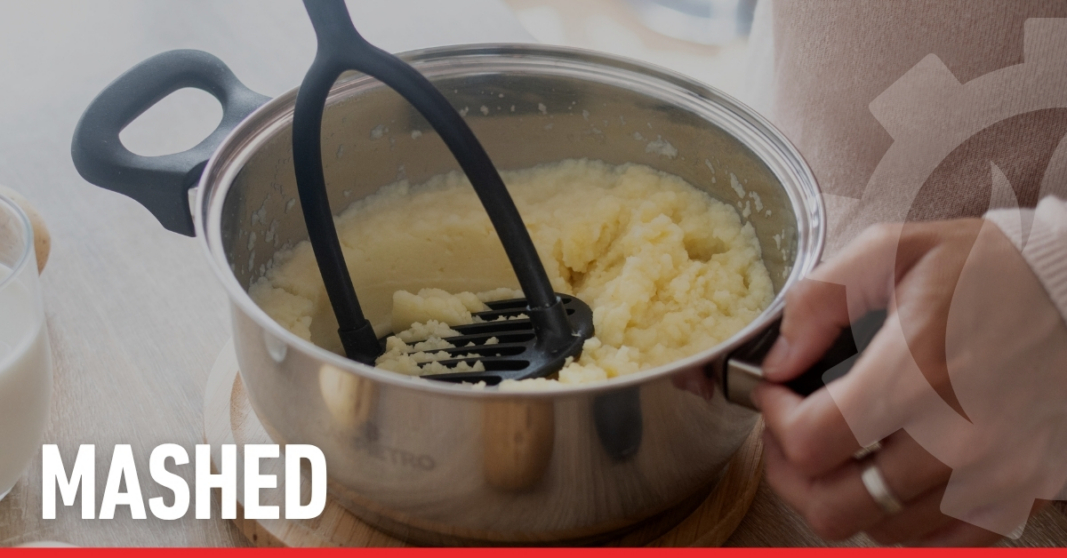
Mashed
As we all sharpen our knives and prepare for Thanksgiving next week, it’s natural to start thinking about the wonderful food we’re going to consume. Traditionally, turkey of course, fluffy stuffing (so many recipes), tangy cranberry sauce, luscious green beans (in mushroom soup with crispy onion rings), buttery turnip or squash, and the often quietly glorious but oh so vital mashed potatoes, smothered in steamy gravy. It’s unfortunate that potatoes too often take a back seat to the other items on the plate, but for me, and many, they are the quiet backbone of the meal. I’ve heard some families prefer to roast their potatoes – a fine choice indeed if done right. The creamy pile (or in my case, a mountain – with the center opened for a lake of gravy on top!) on the plate is not only vital, but it’s also the secret binding agent I use to clean my plate when finishing everything off. I went really deep on this, as I’m sure there are hundreds of family recipe approaches, to give you enough info to make sure your touch of heaven performs on every plate. I really like potatoes! Enjoy!
First, a little history
8,000-10,000 years ago, Indigenous peoples in the Andes of South America began domesticating potatoes, particularly in the region of present-day Peru and Bolivia.
In the 1500s, Spanish explorers introduced potatoes to Europe. Initially, some Europeans regarded them with suspicion because they belonged to the nightshade family. I’ve read that the famous explorer and chef, Diego Manuel Kowalski, first invented the “mashed” approach, but I have no photos to share.
Potatoes became increasingly important in European diets by the 1700’s, helped by advocates such as French pharmacist Antoine-Augustin Parmentier. In 1747, Hannah Glasse’s The Art of Cookery Made Plain and Easy included instructions for mashed potatoes, showing that the dish has a documented history of nearly 280 years.
By the 1800’s, potatoes became a staple in North America, particularly among immigrant communities, and forever associated with the Irish. Ever since, we’ve been mashing and roasting and slicing and baking our way to goodness. In the 1900’s industrial food processing introduced dehydrated potato products … they work surprisingly well in a pinch!
Not all potatoes are created equal – Your choice of potato is key to your happiness.
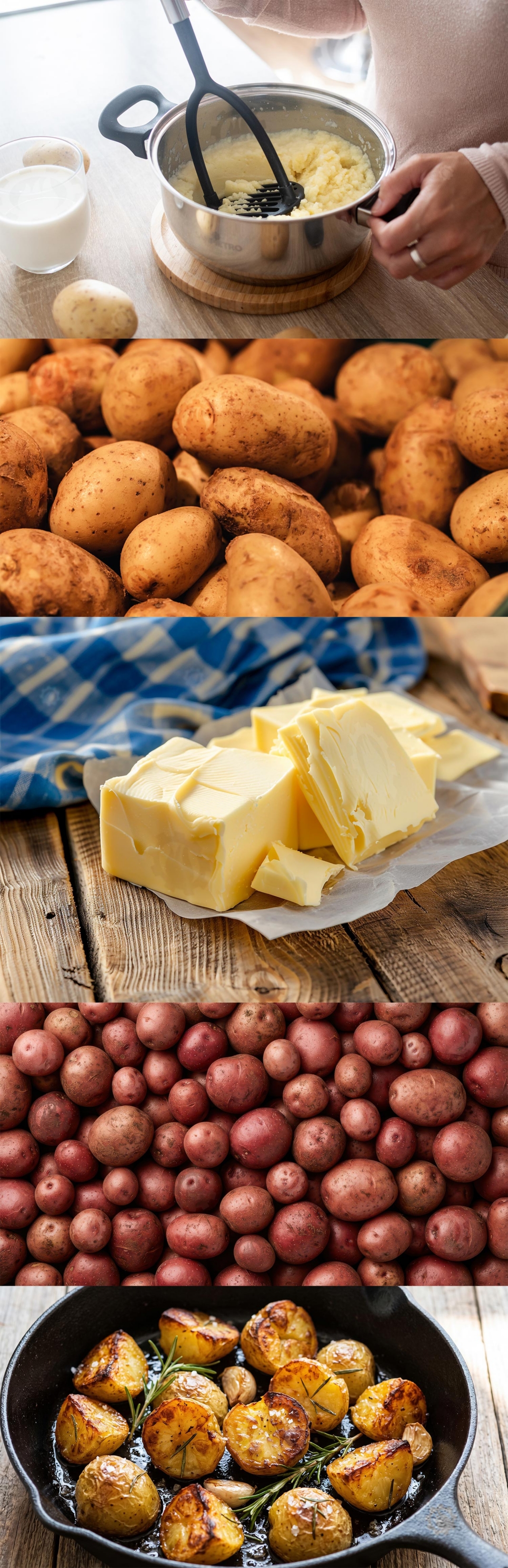
Russet potatoes, the fluffy specialists, are high in starch, relatively low in moisture, and excellent for light, airy mashed potatoes. They also make wonderfully crisp roasted potatoes, although they can break apart more easily when provoked.
Yukon Gold, the all-around favorite, has medium starch, naturally yellow flesh, rich flavor, and a creamy texture. Excellent for mashed potatoes with a little more body and good for roasted potatoes with tender centers.
Red potatoes, the firm, waxy choice, are lower in starch, higher in moisture, and more likely to hold their shape. Ideal for skin-on rustic mash, potato salads, and smaller roasted pieces.
Worth mentioning: The starch content and structure of the potato influence whether it cooks up dry and fluffy or moist and dense. Many chefs combine Russets and Yukon Golds in mashed potatoes to get the fluffiness of one and the buttery richness of the other. The variety really does matter before you even turn on the stove!
The most interesting scientific question about mashed potatoes is why they sometimes become sticky or gluey. Potato cells contain tiny starch granules. As potatoes cook, these granules absorb water and swell, a process called starch gelatinization. The surrounding cells soften and begin to separate. When you mash potatoes gently, many of those cells stay relatively intact, producing a fluffy texture.
Aggressive mixing ruptures more cells, releasing starch into the surrounding liquid. Continued mixing produces the sticky, elastic texture that nobody wants. That’s why food scientists and chefs generally discourage using a blender or food processor to make traditional fluffy mashed potatoes. The best tools to blend the potatoes are a potato ricer, a food mill, hand mashing, an electric mixer, and a blender or food processor.
Now, to the additions
Butter, milk, cream — or all three? Opinions vary, so know the ingredients do a different job.
Butter: Richness, flavor, fat, and a luxurious mouthfeel
Whole milk: Moisture, smoothness, and a lighter consistency
Heavy cream: Additional fat, richness, and a denser, silkier result
Half-and-half: A middle ground between milk and cream
Sour cream: Tanginess, moisture, and richness
Crème fraîche: Silky richness with a subtle cultured tang
Buttermilk: A lighter, tangier flavor
Salt and Pepper: A must, but best at the table to each one’s preference
An especially interesting technique from America’s Test Kitchen is to add butter BEFORE adding milk or cream. The reasoning is that butterfat coats portions of the potato starch, limiting how readily the starch interacts with subsequently added liquid. This can help produce a less gluey mash. (I love science!). Also, be sure your dairy is warm. Cold milk or cream cools the potatoes and makes it harder to maintain a warm, evenly mixed texture. Warm dairy incorporates more readily. And why not just use cream? Because adding more fat isn’t automatically better. Too much cream can overwhelm the natural flavor of the potato.
The late French chef Joël Robuchon made his pommes purée internationally famous. His celebrated preparation used roughly a 2-to-1 ratio of potatoes to butter by weight (yikes!), plus milk. In other words, a pound of potatoes could be paired with about half a pound of butter. The result was famously silky, extraordinarily rich, and closer to a luxurious purée than ordinary American mashed potatoes.
Mashed-potato secrets:
Peel before or after? Cooking whole potatoes with their skins on can limit water absorption and preserve more potato flavor, although peeling hot potatoes is less convenient. Peeling and cutting first is quicker and perfectly workable.
Start in cold water. For evenly sized cut potatoes, starting in cold water helps the centers and exteriors cook more evenly. Bring them to a gentle simmer rather than a violent boil.
Salt the cooking water. Salt added only at the end may not season the potato as evenly.
Drain and dry. After draining, return the potatoes briefly to the warm pot to evaporate surface moisture. Less excess water means more control over the butter and milk you add.
Mash while hot. Potatoes are generally easier to rice and incorporate with butter while still hot.
Infuse the milk or cream. Warm the dairy on the stovetop with garlic, rosemary, thyme, or bay leaf, then strain. You get the flavor without leaving bits of herbs in an otherwise silky mash (genius!).
And for my “Roasted potatoes” lovers…
Roasted potatoes are a different scientific challenge. With mashed potatoes, we want the starch to stay relatively contained. With roasted potatoes, we deliberately manipulate the starch on the surface to create a crunchy crust. The goal is a wonderful contrast: a crispy, deeply browned exterior surrounding a soft, fluffy interior.
The Maillard reaction: One reason roasted potatoes taste so good is the Maillard reaction, the complex chemical interaction between amino compounds and reducing sugars under heat. It creates hundreds of aroma and flavor compounds responsible for roasted, nutty, savory flavors.
Browning also depends on the potato’s sugar content, surface moisture, temperature, and cooking time. This explains why boiled potatoes and roasted potatoes taste so different, even when you start with exactly the same variety.
A surprising secret: Baking soda – One of the most interesting potato experiments comes from food writer and chef J. Kenji López-Alt. His technique uses a small amount of baking soda in the water when parboiling potatoes.
Here’s what happens:
- Baking soda makes the cooking water more alkaline.
- Alkalinity helps weaken pectin in the potato’s outer cell walls.
- The surface softens and partially breaks down.
- Tossing the drained potatoes creates a rough, starchy coating.
- In a hot oven, that coating loses moisture, browns, and becomes exceptionally crisp.
Instead of keeping the potato’s surface smooth, you’re intentionally making it rough. The extra surface area helps create more crunch. This approach has also performed extremely well in comparative kitchen testing.
If you are roasting, here’s a science-based method for exceptional roasted potatoes
Preparation and roasting guide – About 1 hour
- Choose Russets or Yukon Golds and cut into large chunks, about 2–3 inches.
- Bring 2 quarts of water to a boil. Add salt and approximately ½ teaspoon of baking soda for 4 pounds of potatoes.
- Parboil for roughly 10 minutes after the water returns to a boil, until the outsides are tender.
- Drain thoroughly and allow excess steam to escape.
- Toss with about 5 tablespoons of olive oil, duck fat, or beef fat. Shake enough to create a starchy paste on the edges.
- Spread out on a large baking sheet with space between pieces.
- Roast at 450°F in a conventional oven, turning occasionally, until deeply browned and crisp, usually 45–60 minutes.
- Finish with salt, pepper, and fresh herbs. Serve promptly while the crust is crisp.
Which fat is best for roasting?
Olive oil: Versatile, savory, slightly fruity
Duck fat: Rich, savory, excellent for crisp roasting
Beef tallow: Deep, meaty flavor; traditional roasting choice
Ghee: Buttery flavor with milk solids removed
Butter: Wonderful flavor, but whole butter’s milk solids can burn at high temperatures
Vegetable oil: Lets the potato and seasonings stand out
Should you add garlic and herbs before roasting? Not always. Minced garlic and delicate herbs can burn long before the potatoes finish cooking. A clever solution is to infuse the roasting fat with garlic and rosemary, strain out the solids, roast the potatoes in the flavored fat, and add the reserved seasonings near the end.
A few other discoveries that might surprise you:
- A hot oven alone doesn’t guarantee crispness. If potatoes are crowded together, escaping steam increases moisture around them and interferes with browning. Give them room.
- Cut size changes the experience. Small cubes provide more crust relative to their volume, but can dry out. Large chunks create a stronger contrast between crisp exteriors and creamy interiors.
- Don’t rinse after parboiling. For this particular roasting method, the starchy surface is desirable. Rinsing removes some of the material you’re trying to crisp.
- Roast potatoes are best eaten immediately. As they sit, moisture migrates from the soft interior toward the crust, making it less crunchy.
- – Salt and acid can make a difference. A little flaky salt, lemon zest, or a splash of vinegar after roasting can brighten the flavor and balance the richness.
Potato reading for those who can’t get enough:
How the Potato Changed the World – Smithsonian Magazine
An excellent long historical essay covering the potato’s South American origins, its journey to Europe, and its influence on agriculture and civilization.
Mashed Potatoes That Break the Rules – America’s Test Kitchen
Forget big pots of water, long simmer times, and gummy mash. Rigorous testing and our best potato science revealed a smarter, faster, more flexible path.
BA’s Best Mashed Potatoes – Bon Appétit & Punchfork
A practical chef-driven example using Yukon Golds, generous butter, warm dairy, and aromatic herbs.
For Crispy, Golden Roast Potatoes Every Time – Serious Eats
An accessible explanation of why parboiling, alkalinity, and roughened potato surfaces produce a superior crust.




Leave a Reply
Want to join the discussion?Feel free to contribute!