

Rolling Through Time
As a foodie, I love it when Jackie and I come up with something new to try (it’s mostly Jackie doing the “coming up”). The other night, Jackie made an amazing salad, using couscous as the main ingredient. It was complemented by sauteed yellow and red peppers, fresh tomatoes, chicken, and a light dressing of balsamic vinaigrette. As usual, it was amazing – Jackie is incredible at creating dinners – no recipe, just a little of this and a little of that! Of course, it got me thinking about the origin of couscous, and how it made its way to my kitchen table from an origin centuries in the making. PLUS, I just love the name! Enjoy!
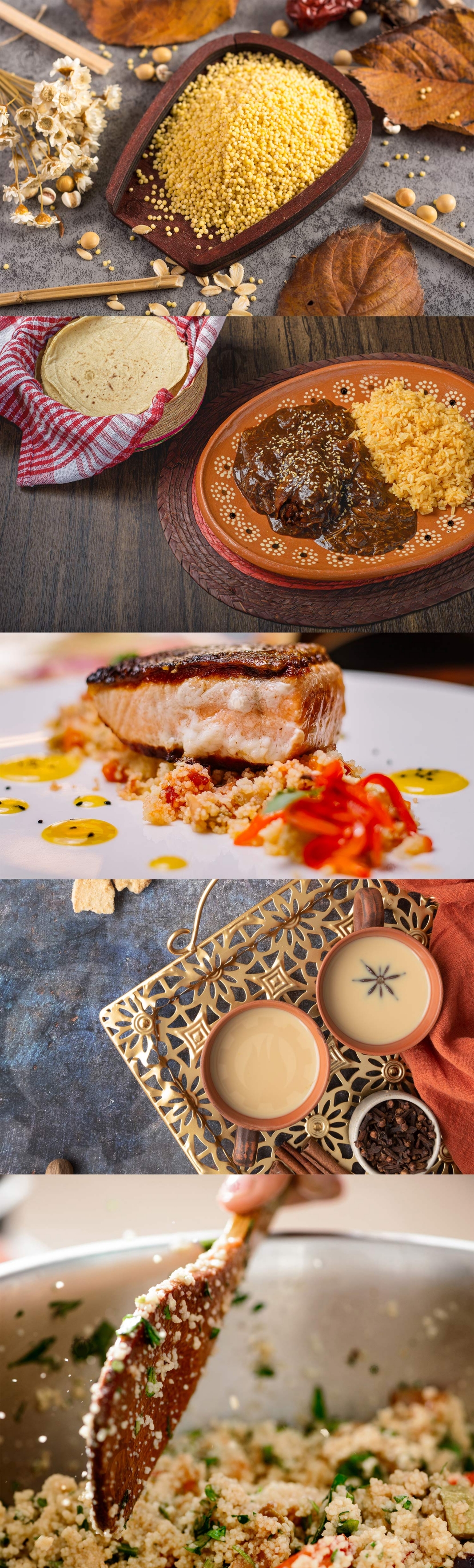
Couscous is a traditional North African dish of small steamed granules of rolled semolina that is often served with a stew spooned on top. Its name reflects this tactile origin, loosely meaning “well rolled” or “formed by hand.”
The word “couscous” (alternately cuscus or kuskus) was first noted in early 17th century French, from Arabic kuskus, from kaskasa ‘to pound’, and is probably of Berber origin. The Berber root *KS means “well-formed, well rolled, rounded.”
Couscous is a staple food throughout the Maghrebi cuisines of Algeria, Tunisia, Mauritania, Morocco, and Libya. It was integrated into French and European cuisine at the beginning of the twentieth century, through the French Colonial empire.
It is unclear when couscous originated. Food historian Lucie Bolens believes couscous originated millennia ago, during the reign of Masinissa in the ancient kingdom of Numidia in present-day Algeria. Traces of cooking vessels akin to couscoussiers have been found in graves from the 3rd century BC, from the time of the Berber kings of Numidia. Maghrebi cooks were preparing dishes of non-mushy grains by stirring flour with water to create light, round balls of couscous dough that could be steamed.
Couscous is traditionally made from semolina, the hardest part of the grain of durum wheat (the hardest of all forms of wheat), which resists the grinding of the millstone. The semolina is sprinkled with water and rolled with the hands to form small pellets, sprinkled with dry flour to keep them separate, and then sieved. Any pellets that are too small to be finished granules of couscous fall through the sieve and are again rolled and sprinkled with dry semolina and rolled into pellets. This labor-intensive process continues until all the semolina has been formed into tiny couscous granules.
In modern times, couscous production is largely mechanized, and the product is sold worldwide.
This couscous can be sauteed before it is cooked in water or another liquid. Properly cooked couscous is light and fluffy, not gummy or gritty.
One major turning point in its global rise came with the invention of instant couscous. Pre-steamed and dried, it allowed home cooks to prepare it in minutes rather than hours. This simple innovation aligned perfectly with modern life. Couscous quietly became a pantry staple, competing with rice and pasta for everyday meals.
Traditionally, North Africans use a food steamer. The base is a tall metal pot shaped like an oil jar, where the meat and vegetables are cooked as a stew. On top of the base, a steamer sits where the couscous is cooked, absorbing the flavors from the stew. The steamer’s lid has holes around its edge so steam can escape. It is also possible to use a pot with a steamer insert. If the holes are too big, the steamer can be lined with damp cheesecloth.
Here are some traditions: (If you are like me, when you’re reading this, you should be getting very hungry!)
Algeria
Algerian couscous is a traditional staple food in Algeria, and it plays an important role in Algerian cuisine. It is commonly served with vegetables, meat, or fish.
Egypt
In Egypt, couscous (Egyptian Arabic: koskosi) is traditionally prepared and consumed as a sweet dish, differing notably from the savory couscous dishes commonly associated with other North African cuisines. It is typically served for breakfast, as a light evening meal, or as a dessert. The preparation involves steaming or soaking the couscous with melted butter and hot water, after which it is topped with a variety of sweet ingredients. Common toppings include sugar (white, brown, or powdered), cinnamon, grated coconut, raisins, and assorted nuts such as almonds, walnuts, or hazelnuts. In some variations, sweetened condensed milk may also be used.
Libya
In Libya, couscous is mostly served with lamb (but sometimes camel meat (what??) or, rarely, beef) in Tripoli and the western parts of Libya, but not during official ceremonies or weddings. Another way to eat couscous is as a dessert; it is prepared with dates, sesame, and pure honey and is locally referred to as maghrood.
Malta
In Malta, small round pasta slightly larger than typical couscous is known as kusksu. It is commonly used in a dish of the same name, which includes broad beans (known in Maltese as ful) and ġbejniet, a local type of cheese.
Mauritania
In Mauritania, the couscous uses large wheat grains (mabroum) and is darker than the yellow couscous of Morocco. It is cooked with lamb, beef, or camel meat together with vegetables, primarily onion, tomato, and carrots, then mixed with a sauce and served with ghee, locally known as dhen.
Morocco
In Morocco, couscous is a cultural staple traditionally served on Fridays following midday prayers. One of the most iconic preparations is couscous with seven vegetables, which typically features a broth of beef, lamb, or chicken, piled high with a variety of slow-cooked vegetables such as carrots, turnips, pumpkin, zucchini, and cabbage, alongside chickpeas. (I would crush this!!). Another celebrated variation is couscous tfaya, a sweet and savory dish where the steamed semolina and meat are topped with a caramelized garnish of onions, raisins, cinnamon, and toasted almonds, often served in a large communal clay platter known as a gsaa.
Tunisia
In Tunisia, couscous is usually spicy, made with harissa sauce, and served commonly with vegetables and meat, including lamb, fish, seafood, beef, and sometimes (in southern regions) camel (really?). Fish couscous is a Tunisian specialty and can also be made with octopus, squid, or other seafood, in a hot, red, spicy sauce. Couscous can also be served as a dessert. It is then called masfuf. Masfuf can also contain raisins, grapes, or pomegranate seeds.
Couscous isn’t unique in its structure. Across cultures, repeated or rhythmic names show up often in food, sometimes rooted in language, sometimes in marketing, and sometimes just in sound. Take couscous – the rolling of the grains. It’s descriptive, almost mimicking the motion that creates it. Since I love the name Couscous, I thought I would share what’s called the The Echo Effect: Foods with Repeated Names
- mole mole – (Mexican sauce)
- Cou-cou (a cornmeal and okra mash popular in Barbados)
- Mahi-mahi (a type of fish, also known as dolphin fish)
- M&M’s (I like peanut)
- Bon Bon (small chocolate)
- Ho Ho’s (little chocolate cake bundles of joy)
- Moo Moo (flavored milk)
- Pom Pom (snack or cheerleading item)
Repeated meaning:
- Chai tea (technically means “tea tea,” as chai means tea in many languages)
- Ahi tuna (technically “tuna tuna,” as ahi means tuna in Hawaiian)
- Naan bread (technically “bread bread”)
- Queso cheese (technically “cheese cheese”)
Fun Product Names:
- Nik Naks (a popular snack brand, and clutter around the house)
- Tic Tac (a popular breath mint)
- Kit Kat (chocolate bar)
- Flip Flop (footwear)
Rhyming/Reduplicative Names:
- Easy-peasy (often used in marketing)
- Hokey-pokey (dance and frozen dessert)
- Fitbit (activity tracker)
- StubHub (ticket site)
- Grubhub (food delivery)
How did you do on our last logo contest?
Check out our logo guide for the “Loaded Questions” post here!




Leave a Reply
Want to join the discussion?Feel free to contribute!