
Feeding the World
Recently, Jackie and I were experimenting with some new recipes and came across a fun dish that included rice. I love rice, especially when I get fresh Chinese food at my local Chinese restaurant – I love chicken fried rice! When it’s made right, it’s fluffy and tasty, and great at sopping up all the goodness in the dish. Granted, I also love sushi rice in a fresh roll or Basmati rice with my tikka masala! Rice is so common that it’s easy to overlook just how remarkable it is. I did some digging and found that behind a simple bowl of white or brown grains is a crop that’s helped build civilizations, shaped where people lived, and still feeds more than half the planet every day (that’s over 4 BILLION!!) From the early ancient-flooded paddies to today’s AI-guided farming, rice has one of the longest and most fascinating stories in agriculture. Here’s some info I hope you’ll find fascinating (and a bit mind-blowing), along with a quick and easy recipe at the end. Enjoy!!
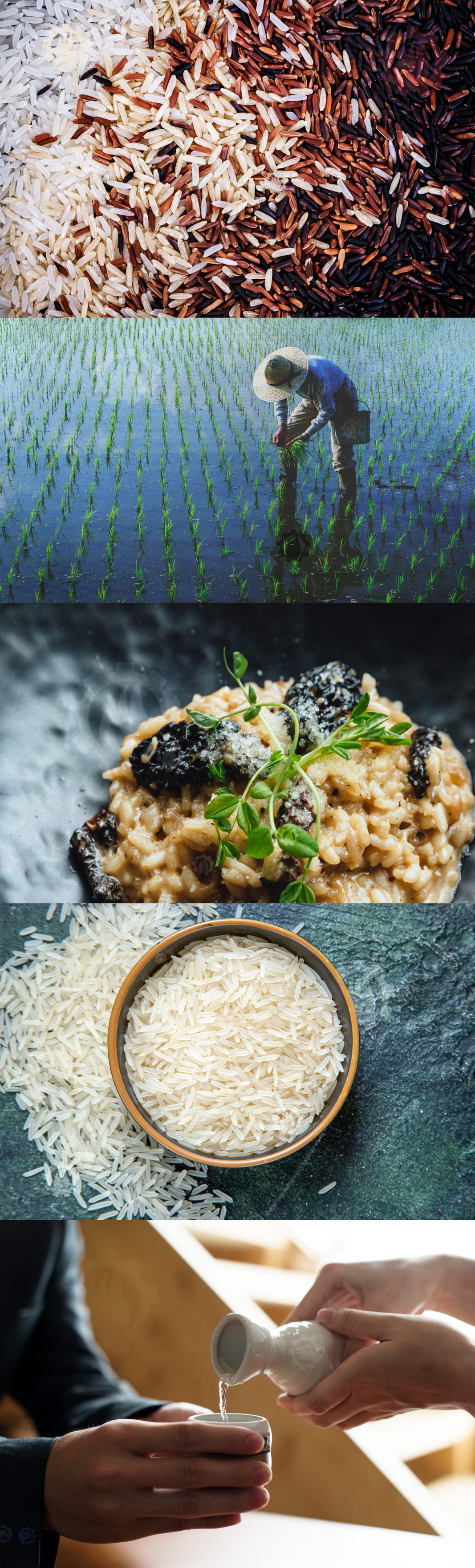
For all of the botanists out there, here is the amazing science behind rice, which comes from the rice plant. It can grow to over 1 m (3 ft) tall, if in deep water, and can reach a length of 16 ft. From seed to harvest, it takes about six months. A single plant may have several leafy stems or tillers. The upright stem is jointed with nodes along its length; a long, slender leaf arises from each node. The self-fertile flowers are produced in a panicle, a branched inflorescence that arises from the last internode on the stem. There can be up to 350 spikelets in a panicle, each containing male and female flower parts (anthers and ovules). A fertilized ovule develops into the edible grain or caryopsis. Rice is a cereal belonging to the family Poaceae. As a tropical crop, it can be grown during the two distinct seasons (dry and wet) of the year, provided that sufficient water is made available.
Rice was first domesticated in Asia roughly 7,000–9,000 years ago. Rice is one of humanity’s oldest cultivated crops. Entire societies grew around it, especially in China, India, and Southeast Asia. Growing rice-shaped landscapes, not just diets. Those iconic terraced rice fields carved into hillsides aren’t just beautiful — they’re engineering solutions developed centuries ago to control water, prevent erosion, and farm steep terrain.
Traditional rice paddies are flooded on purpose. Standing water suppresses weeds, stabilizes temperatures, and creates ideal growing conditions for rice plants — even though most other crops would die in the same environment. In the 11th century, a fast-growing strain called Champa rice spread through China. Because it matured quickly and resisted drought, farmers could harvest more often — helping feed a rapidly growing population.
Rice is the primary staple food for more than half the world’s population, especially across Asia, Africa, and parts of Latin America. And the global scale is enormous – global rice production is around 750–800 million metric tons per year, grown on roughly 165–170 million hectares of land worldwide. China and India alone account for over half of the total production.
Thousands of varieties – there isn’t just “white” and “brown” rice – there are tens of thousands of rice varieties worldwide, including black, red, purple, aromatic, sticky, long-grain, short-grain, and specialty rices bred for specific dishes or climates. The varieties of rice are typically classified as short-, medium-, and long-grained. Oryza sativa indica varieties are usually long-grained; Oryza sativa japonica varieties are usually short- or medium-grained. Short-grain rice, with the exception of Spanish Bomba, is usually sticky when cooked and is suitable for puddings. Thai Jasmine rice is aromatic, and, unusually for a long-grain rice, has some stickiness, with a soft texture. Indian Basmati rice is very long-grained and aromatic. Italian Arborio rice, used for risotto, is of medium length, oval, and quite sticky. Japanese sushi rice is a sticky short-grain variety (I like them all!!). The starch makeup of rice determines whether it’s fluffy (like basmati), creamy (risotto rice), or sticky (sushi and glutinous rice). Same crop — totally different eating experience.
Today’s rice fields are high tech – using GPS-guided tractors, drone monitoring, soil sensors, and water-management systems. New methods like alternate wetting and drying reduce water use and methane emissions compared to constant flooding.
Here are some cool videos:
Rice isn’t just food – it’s used to make rice flour (noodles, baked goods, snacks), rice bran oil, alcohol (sake, rice wine), dairy alternatives (rice milk), animal feed, and even cosmetics. Beyond consumption, rice represents life, fertility, and prosperity in many cultures. It appears in wedding traditions, harvest festivals, religious offerings, and even everyday greetings about meals.
Something we don’t hear much about is that flooded paddies produce methane, a potent greenhouse gas. Rice paddies account for almost half of all crop greenhouse gas emissions worldwide (that’s a lot!!). That’s why new growing techniques improving harvest speed and also indoor growing aim to balance yields with environmental impact — a major focus for future rice research.




Leave a Reply
Want to join the discussion?Feel free to contribute!