

Holy Cow!
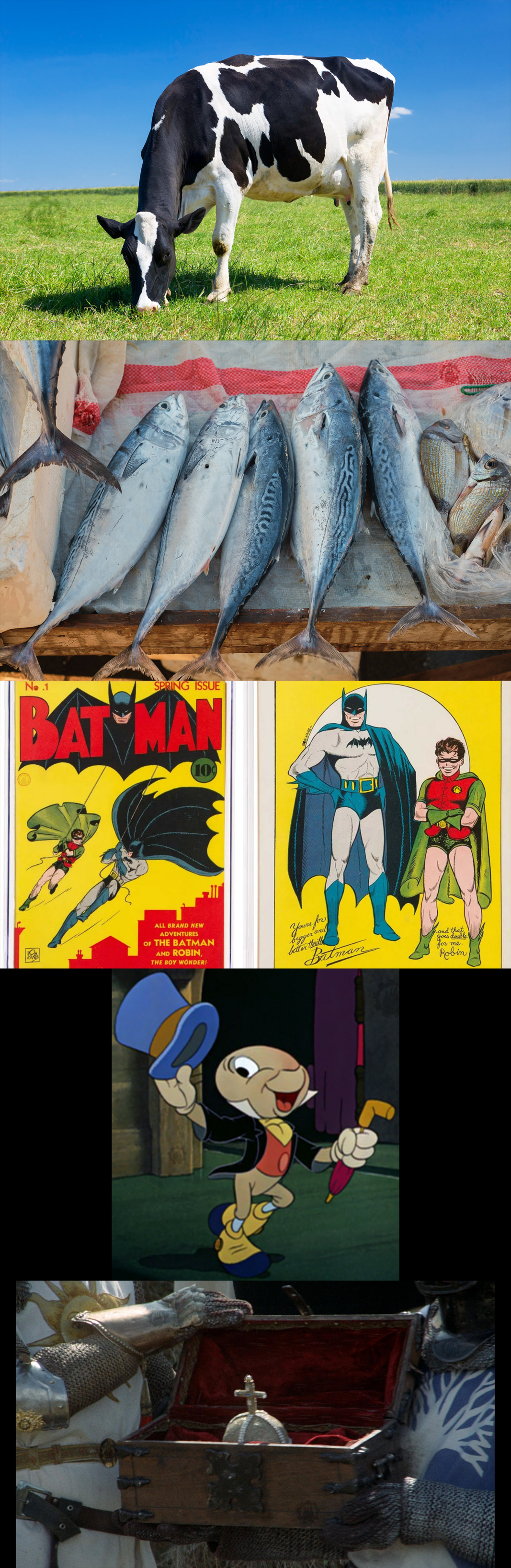
I was at a Guardians game the other night, and watching a ball carry easily into right field, I thought to myself, “holy cow, he hit that one a ton.” After the inning ended, I quietly wondered where holy cow came from—and why I chose those words. Does the phrase have ties to a specific religion or culture? Is it just a random combination, or is there really a specific cow out there I should know more about? Then, of course, my mind wandered to Holy smokes, Holy Toledo, and of course Holy Moly and my personal favorite Holy Mackerel! (yes, I am a man of deep thoughts – you can ask anyone who knows me). Searching online, I learned that holy cow is a relatively late entry in a long line of similar phrases used to express surprise. For example, holy Moses dates back to the 1850s, according to the Oxford English Dictionary, while holy smokes and holy mackerel were in use by the 1890s. These expressions are examples of minced oaths—replacement phrases used to avoid profanity or direct religious’ invocation…something Jackie compliments me on! One of my “go to” expressions in front of the grandkids is “dang!” So, for those who do their best to control their language, here’s a fun recap of enthusiastic expressions. Special thanks to Google, Wikipedia, YouTube, Monty Python and of course Batman and Robin. Enjoy.
The Cretan king Rhadamanthus is said to have forbidden his subjects to swear by the gods, suggesting that they instead swear by the ram, the goose or the plane tree. Socrates favored the “Rhadamanthine” oath “by the dog”, with “the dog” often interpreted as referring to the bright “Dog Star”, i.e., Sirius. Aristophanes mentions that people used to swear by birds instead of by the gods, adding that the soothsayer Lampon still swears by the goose “whenever he’s going to cheat you”.
The use of minced oaths in English dates back at least to the 14th century, when “gog” and “kokk”, both euphemisms for God, were in use. Other early minced oaths include “Gis” or “Jis” for Jesus (1528).
Late Elizabethan drama contains a profusion of minced oaths, probably due to Puritan opposition to swearing. Seven new minced oaths are first recorded between 1598 and 1602, including ‘sblood for “By God’s blood” from Shakespeare, ‘slight for “God’s light” from Ben Jonson, and ‘snails for “God’s nails” from the historian John Hayward.
Swearing on stage was officially banned by the Act to Restrain Abuses of Players in 1606, and a general ban on swearing followed in 1623. Other examples from the 1650s included ‘slid for “By God’s eyelid” (1598), ‘sfoot for “By God’s foot” (1602), and gadzooks for “By God’s hooks” (referring to the nails on Christ’s cross). In the late 17th century, egad meant oh God, and ods bodikins for “By God’s bodkins [i.e. nail]s” in 1709.
Linguists call these expressions minced oaths, and they spread rapidly as politeness, broadcasting standards, and mixed company made cleaner language desirable. Across all of them, the pattern is consistent: emotional intensity paired with social caution. Whether the substitute is biblical, mundane, or ridiculous, the goal is the same—to react strongly without crossing a line.
Why “holy” shows up everywhere
The word holy became popular in exclamations because it sits right at the edge of the sacred. For centuries, people reached for religious language when startled, amazed, or alarmed—but directly invoking God, Jesus, or sacred names gradually became socially risky or offensive. The solution was a linguistic workaround: keep the emotional weight of holy, but pair it with something harmless, absurd, or indirect.
Holy Cow
First appearing in American English in the late 1800s, holy cow is one of the most enduring minced oaths. The cow may have been chosen because of its sacred status in Hinduism, but just as likely because it was familiar, harmless, and faintly humorous to Western ears.
The phrase gained enormous traction through baseball announcers and radio, where expressive but family-friendly language was essential. Broadcasters like Halsey Hall, Harry Caray, and Phil Rizzuto helped carry holy cow into the American mainstream—proof that baseball has long been a farm system for clean excitement.
Holy Smokes
Holy smokes emerged in the 19th century as a soft substitute for stronger religious invocations. “Smokes” may loosely echo religious imagery – incense, mystery, something rising skyward – but its real job is deflection. That’s why it stuck in journalism, radio, and everyday speech.
Holy Mackerel
Recorded by the mid-1800s, holy mackerel leans heavily into comic absurdity. Some tie it to Christian fish symbolism; others believe it was chosen precisely because it was so random. Either way, the phrase loses its seriousness while keeping its emotional punch.
Holy Moly
Holy moly likely derives from holy Moses, compressed and softened over time. The rhyme and rhythm made it easy to say and easy to remember. It became popular in mid-20th-century American speech, especially in comics and children’s media. Its bouncy sound makes it feel surprised but never angry—a safe exclamation for nearly any audience.
Holy Toledo
The origin of holy Toledo is murkier. Toledo, Spain, was once a major religious center, while Toledo, Ohio loomed large in American industrial life—either could have influenced the phrase. What matters more is how it works: pairing a serious religious adjective with a place name creates surprise without offense. The phrase peaked in early-20th-century American slang.
Holy Moses
This is a direct—but still indirect—biblical reference. Moses is unquestionably sacred, yet invoking a prophet feels safer than invoking God outright. Holy Moses has been in use since at least the early 1800s and often signals awe more than shock. It sits closer to the religious edge than many other expressions, which may explain why its popularity has waxed and waned.
Holy Crap
A modern descendant of the same tradition, holy crap swaps religious sensitivity for mild vulgarity. It keeps holy as an intensifier but replaces the harmless noun with something just edgy enough to feel contemporary. It reflects a cultural shift: less concern about religious offense, more about tone and informality.
Holy Hannah
Holy Hannah likely references the biblical Hannah, mother of the prophet Samuel. Like Moses, she provides religious distance without direct invocation. The phrase gained popularity in rural and Midwestern American speech in the late 19th century.
Holy Jumping Jehoshaphat
One of the most elaborate minced oaths, this phrase invokes a lesser-known Old Testament king. Its length and rhythm turn it into performance. The theatricality made it popular in the late 1800s and early 1900s, especially in print and public speaking. The more syllables, the safer the oath.
Holy Guacamole
A late-20th-century entry, holy guacamole reflects American pop culture and food familiarity. The phrase exploded alongside the rise of Tex-Mex cuisine. Its humor comes from contrast: ancient reverence meets a casual party dip.
Holy Batmobile!
Popularized by the 1960s Batman TV series, this phrase cemented the “holy + noun” structure in pop culture. Robin’s exaggerated delivery made it iconic and demonstrated how the format could be endlessly customized for entertainment.
Holy Hand Grenade (of Antioch)
Immortalized by Monty Python and the Holy Grail, this phrase parodies the entire tradition by mixing extreme sacredness with extreme absurdity. It works because it exaggerates the very mechanism that makes minced oaths effective. “According to the Book of Armaments, the counting shall be three… no more, no less.”
Jiminy Cricket
Jiminy Cricket is a euphemistic stand-in for Jesus Christ, dating back to at least the early 1800s. The phonetic similarity allowed speakers to express surprise without explicitly invoking Christ’s name. Disney later cemented the phrase in popular culture, giving it a cheerful innocence that erased its religious origins for many speakers.
So next time you’re full of expression, feel free to pick your favorite. Whether it’s holy cow, holy guacamole, or holy jumping Jehoshaphat, you’re participating in a centuries-old tradition of saying exactly how you feel—without getting yourself in trouble.
How did you do on our last logo contest?
Check out our logo guide for the “Dear…” post here!




Leave a Reply
Want to join the discussion?Feel free to contribute!