
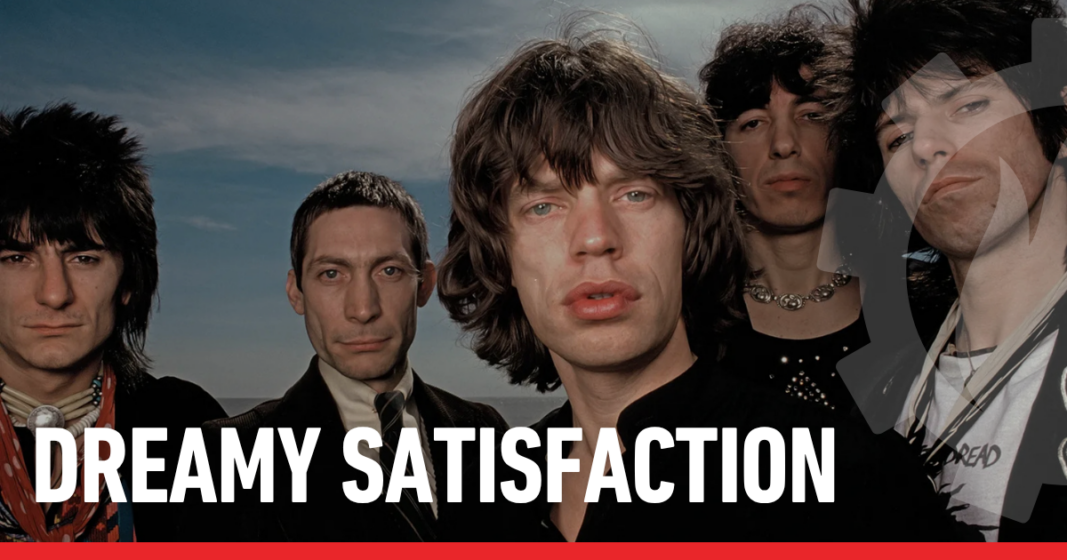
Dreamy Satisfaction
Like most of us, I’ll admit that sometimes I get a tad bit frustrated. Sometimes it’s the little things – can’t find my keys, waiting in traffic a little more than I want, or just having a day that just seems out of balance. To break the frustration, I like to just laugh out loud at the silliness of it all, put my head down, and plow through the feeling. Some days I‘m just a little off – I do realize this is surprising to those who know me well!– and as Mick Jagger told us, he too just couldn’t get any “satisfaction.” Today marks the day (over 60 years ago – yikes!) when Mick and his band of British crooners took the US by storm, releasing one of their most popular hits: (I Can’t Get No) Satisfaction. Now, I’m gonna guess a few, if any, readers of this blog haven’t heard this tune. It’s driving guitar riff, and simple lyrics, are sort of locked in our heads, and we just sing along every time it comes on the radio – I am only allowed to sing this when in the car by myself or in the office, really early in the morning when no one else has to suffer through my “singing” performance. I did some digging to find out more about the song, its history, and impact on Rock N Roll and the “Stones” breakthrough in American culture. Be sure to listen and enjoy the song – the first is when they are just kids lip-syncing on TV, and the live version shows the energy of the song in 2013. Enjoy!
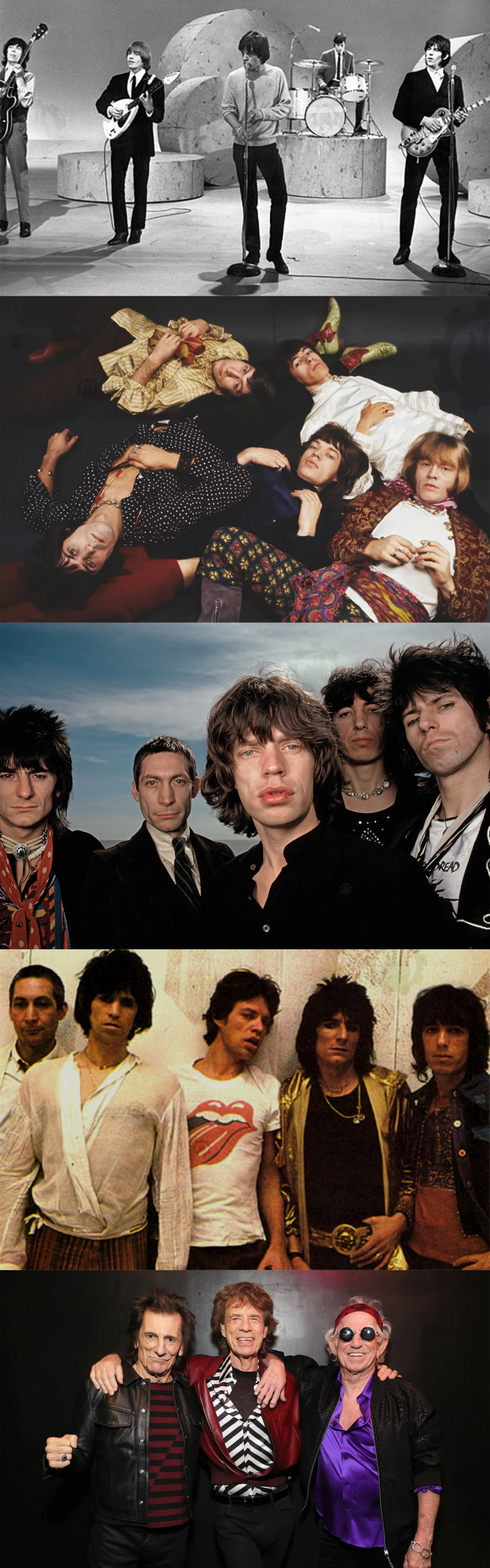
In 1965:
Years Later, with the crowd, live:
(I Can’t Get No) Satisfaction” is a song by the English rock band the Rolling Stones. A product of Mick Jagger and Keith Richards’ songwriting partnership, it features a guitar riff by Richards that opens and drives the song. The riff is widely considered one of the greatest hooks in rock history.
Before “Satisfaction” came along, The Rolling Stones were a scrappy British blues band obsessed with American music, rhythm and blues. Mick Jagger and Keith Richards built their early sound covering artists like Muddy Waters and Chuck Berry, trying really hard to blend that raw energy and the band’s rock n roll sound to a wider audience. They had modest hits but were still living in the shadow of The Beatles and other “British Invasion” bands, searching for a defining identity. By early 1965, they were touring heavily in the U.S., absorbing its culture and counterculture.
The origin of “(I Can’t Get No) Satisfaction” is the kind of story that feels almost mythical. While on tour, Keith Richards woke up in the middle of the night with a guitar riff in his head and recorded it on a Phillips cassette recorder beside his bed. He fell back asleep immediately, leaving behind a rough sketch of what would become history. followed by nearly an hour of tape filled with silence and snoring for 40 minutes. Richards later said, “I had no idea I’d written it… It was all there on the tape.”
With the riff in hand, Mick Jagger began shaping the lyrics, reportedly while lounging by a hotel pool in Clearwater, FL, during the American tour. Instead of writing a simple love song, he tapped into a deeper frustration with advertising, media overload, and the emptiness of modern life. Lines about hearing the same messages on the radio reflected a growing skepticism among young people in the 1960s. Jagger later explained the song as capturing “a kind of teenage frustration… but also a broader sense of dissatisfaction with the world.”
That famous buzzing guitar riff almost didn’t exist in its final form. Richards originally imagined the part being played by horns and used a Gibson fuzzbox pedal only as a temporary guide during recording. But the gritty, distorted tone—recorded using an early Gibson fuzz unit—felt new and urgent, and the band kept it. That decision helped redefine rock music, making distortion not just acceptable, but essential. (Fuzzboxes sold out the year it was released).
The Rolling Stones first recorded the track on 10 May 1965 at Chess Studios in Chicago, Illinois, which included Brian Jones on harmonica. The Stones lip-synched to a dub of this version the first time they debuted the song on the American music variety television program Shindig!
The group re-recorded it two days later at RCA Studios in Hollywood, California, with a different beat and the Maestro fuzzbox adding sustain to the sound of the guitar riff. Richards envisioned redoing the track later with a horn section playing the riff: “This was just a little sketch, because, to my mind, the fuzz tone was really there to denote what the horns would be doing”. The other Rolling Stones eventually outvoted Richards and Jagger, so the track was selected for release as a single (great decision!).
The song was first released as a single in the United States in June 1965 and was also featured on the American version of the Rolling Stones’ third studio album, Out of Our Heads, released that July. “Satisfaction” was a hit, giving the Stones their first number one in the US. In the UK, the song was initially played only on private radio stations because its lyrics were considered too suggestive. It later became the Rolling Stones’ fourth number one in the United Kingdom.
According to Jagger, “It was the song that really made the Rolling Stones, changed us from just another band into a huge, monster band … It has a very catchy title. It has a very catchy guitar riff. It has a great guitar sound, which was original at that time. And it captures a spirit of the times, which is very important in those kinds of songs … Which was alienation.”
“Satisfaction” didn’t just top charts – it captured a cultural shift. Its raw tone of defiance and dissatisfaction resonated with a generation beginning to question authority, consumerism, and social norms. The song helped cement the Stones’ image as rebellious counterparts to the cleaner-cut Beatles, Herman’s Hermits, Beach Boys, and other popular bands at the time. In doing so, it redefined what a rock band could say and how it could sound.
Decades later, “(I Can’t Get No) Satisfaction” remains one of the most recognizable songs in music history – “five notes that shook the world.” Its riff is instantly identifiable, its lyrics easy to recite, its message still relatable, and its influence still felt across musical genres. It’s been rerecorded by other artists over time (Otis Redding, DEVO, Britney Spears) as it marked the moment the Rolling Stones became not just popular, but iconic.
What began as a half-asleep idea became a permanent piece of rock and roll DNA.
How did you do on our last logo contest?
Check out our logo guide for the “Holy Cow!” post here!




Leave a Reply
Want to join the discussion?Feel free to contribute!