
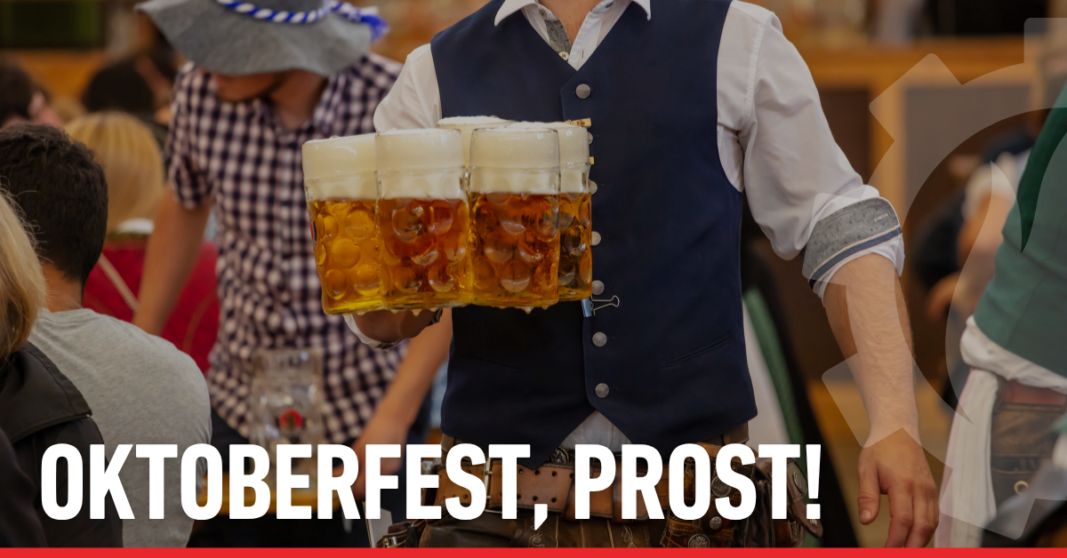
Prost
As we slide in October, I had a bit of nostalgia from a business trip I took years ago, (of course there to help solve my customer’s PIA (Pain in the @%$) Jobs!, which ALMOST included a visit to the world’s largest folk festival known as Oktoberfest, but just couldn’t sneak it in! Part county fair, part food festival, part beer festival, Oktoberfest attracts 6-7 million visitors from over 100 countries, featuring 14 enormous beer tents, 20 smaller food and vendor tents, and hundreds of carnival rides, parades and music performances over 2-3 weeklong celebration. If you’ve never attended, I suggest you put it on your bucket (“beer bucket”) list – it’s simply a blast. Here’s a bit of history and a bunch of fun facts I think you’ll enjoy.
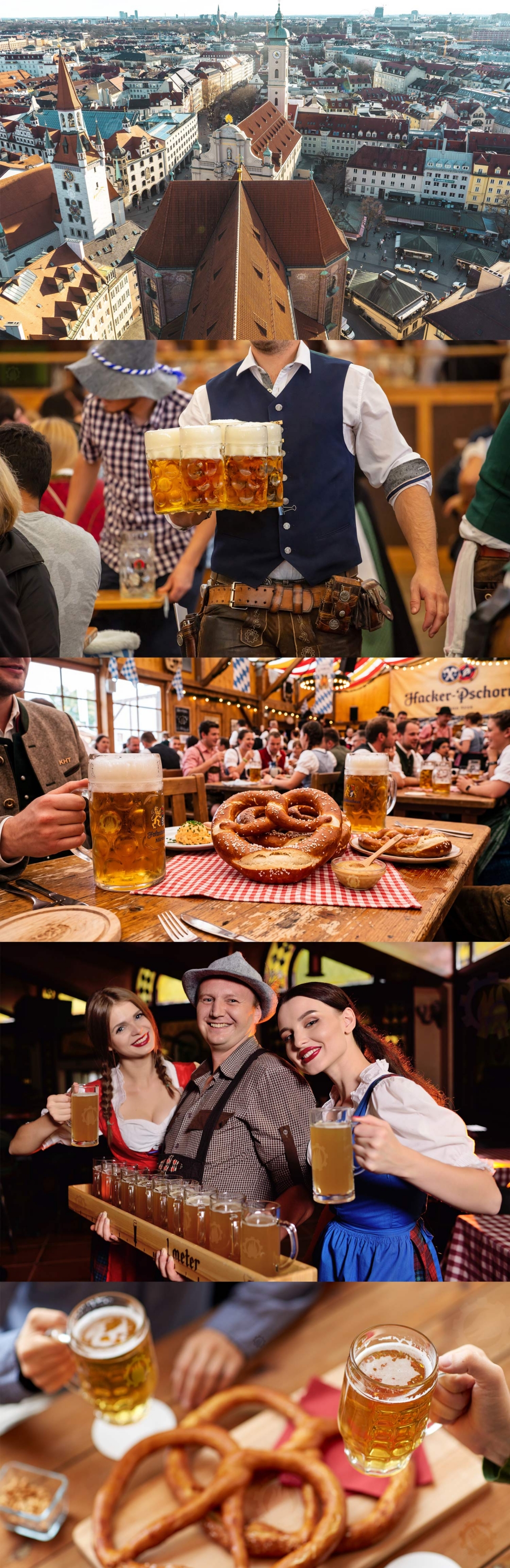
Oktoberfest (German pronunciation: [ɔkˈtoːbɐˌfɛst] Bavarian: Oktobafest/d’Wiesn) is the world’s largest folk festival Volksfest. It combines a beer festival with a giant fair, held annually in Munich on the Theresienwiese from mid-September to the first Sunday in October. The event draws around seven million visitors each year (In 2023, attendance reached a record 7.2 million) and consumes approximately 7.4 million liters of beer (2 million gallons!!)
Every autumn, millions of people don traditional Bavarian clothing, raise oversized mugs of beer, feast on giant pretzels and roasted chicken, and celebrate one of the world’s most famous festivals. Surprisingly, it didn’t begin as a beer festival at all. It all started with a wedding. On October 12, 1810, Crown Prince Ludwig of Bavaria (who later became King Ludwig I) married Princess Therese of Saxe-Hildburghausen in Munich, Germany. To celebrate the royal wedding, the citizens of Munich were invited to a large public festival held in fields outside the city walls. The celebration ended with horse races that were so popular they decided to do it again the following year. Those fields became known as the Theresienwiese (“Therese’s Meadow”), named after the bride, known locally as “die Wiesn” today.
One of the biggest misconceptions is that Oktoberfest happens in October. Originally it did. However, organizers gradually moved the festival earlier into September because Bavaria enjoys warmer weather, longer daylight, and better conditions for outdoor celebrations. Today the festival typically begins in mid-to-late September and ends on the first Sunday in October (only the final days usually occur in October – now you know!!) Here’s a link to this year’s festival.
During a typical Oktoberfest: Around 7.5 million liters of beer are served. That’s approximately 2 million gallons – enough beer to fill nearly three Olympic-size swimming pools. And every drop must come from one of Munich’s six traditional breweries: Augustiner, Hacker-Pschorr, Hofbräu, Löwenbräu, Paulaner, Spaten – only beer brewed within Munich under strict brewing standards may officially be served at Oktoberfest.
The famous glass mugs are called Maß (pronounced “Mahss”), each holding about 1 liter (about 34 ounces, which is more than two standard American beers). An empty glass mug weighs nearly three pounds before it’s even filled. Skilled servers often carry 10, 12, even 15 filled mugs at once.
Food is every bit as important as what’s in the mug. Some Oktoberfest favorites include giant soft pretzels, half-roasted chickens (“Hendl”), traditional Bavarian sausages, and pork knuckles (“Schweinshaxe”); these are my personal favorites! Obatzda (a creamy cheese spread), Potato dumplings, and apple strudel.
Inside every beer tent, you’ll find live bands playing throughout the day, which include traditional Bavarian folk music, brass bands, drum and bugle marches, German sing-alongs, and popular songs everyone joins in singing. One of the festival’s best-known traditions happens when the band plays: “Ein Prosit der Gemütlichkeit!” Everyone stands, raises their mugs, and joins in a giant toast. It happens every 15 to 20 minutes all day long.
Traditional clothing has become one of Oktoberfest’s most recognizable traditions. Men wear lederhosen (leather shorts), wool socks, suspenders, and alpine hats. Women wear dirndls, aprons, and decorative German blouses. (Trivia: The side on which a woman ties her apron bow traditionally carries meaning: Left = Single, Right = Married or in a relationship, Center front = Virgin (traditional interpretation), Back = Widow or waitress
Oktoberfest officially begins with one of Germany’s most anticipated moments. The Mayor of Munich taps the first beer keg and declares: “O’zapft is!” – translated: “It’s tapped!” Only after those words are spoken can beer officially begin flowing throughout the festival.
The first Sunday features one of Europe’s largest traditional parades that includes more than 9,000 participants, hundreds of horses, brass bands, historic uniforms, decorated wagons, and cultural organizations all marching through Munich, celebrating Bavaria’s history and traditions.
Fun Oktoberfest Trivia
- Some Oktoberfest pretzels measure more than a foot across.
- A single Maß often costs the equivalent of $15–20 USD or more, depending on the year.
- Every year officials recover thousands of forgotten items, including wallets, cellphones, wedding rings, eyeglasses, keys, dentures (oh my!), wheelchairs, crutches, and even artificial limbs – apparently, people become distracted during the festivities!
- Today, Oktoberfest is celebrated on nearly every continent. Some of the largest festivals outside Germany include Kitchener–Waterloo, Ontario, Canada, Cincinnati, Ohio (one of America’s largest), Blumenau, Brazil and Brisbane, Australia.
- Perhaps no single English word fully captures the heart of Oktoberfest. The German word Gemütlichkeit means more than comfort. It suggests warm hospitality, good friends, shared laughter, community, relaxation, and belonging (I can attest to all of these). That spirit—not simply the beer—is why Oktoberfest has endured for over 215 years.
Whether you’re attending the original celebration in Munich, enjoying a local Oktoberfest in your hometown, or simply sharing a giant pretzel with friends, you’re participating in a tradition that began with a royal wedding in 1810 and grew into the largest folk festival on Earth. So, the next time someone asks why Oktoberfest starts in September, you’ll know the answer, and perhaps you’ll even be ready with a hearty “Prost!”
How did you do on our last logo contest?
Check out our logo guide for the “Do Do Do Do – Do Do Do Do” post here!




Leave a Reply
Want to join the discussion?Feel free to contribute!